Is Latin a dead language? Where Latin lives today — and how to learn it
Latin has no native speakers — and yet the Church writes in it, half a million German pupils learn it, radio has read the news in it, and universities teach whole courses in it. Where Latin lives today, how it sounded, and how to learn it five minutes a day.
Updated · 8 min read
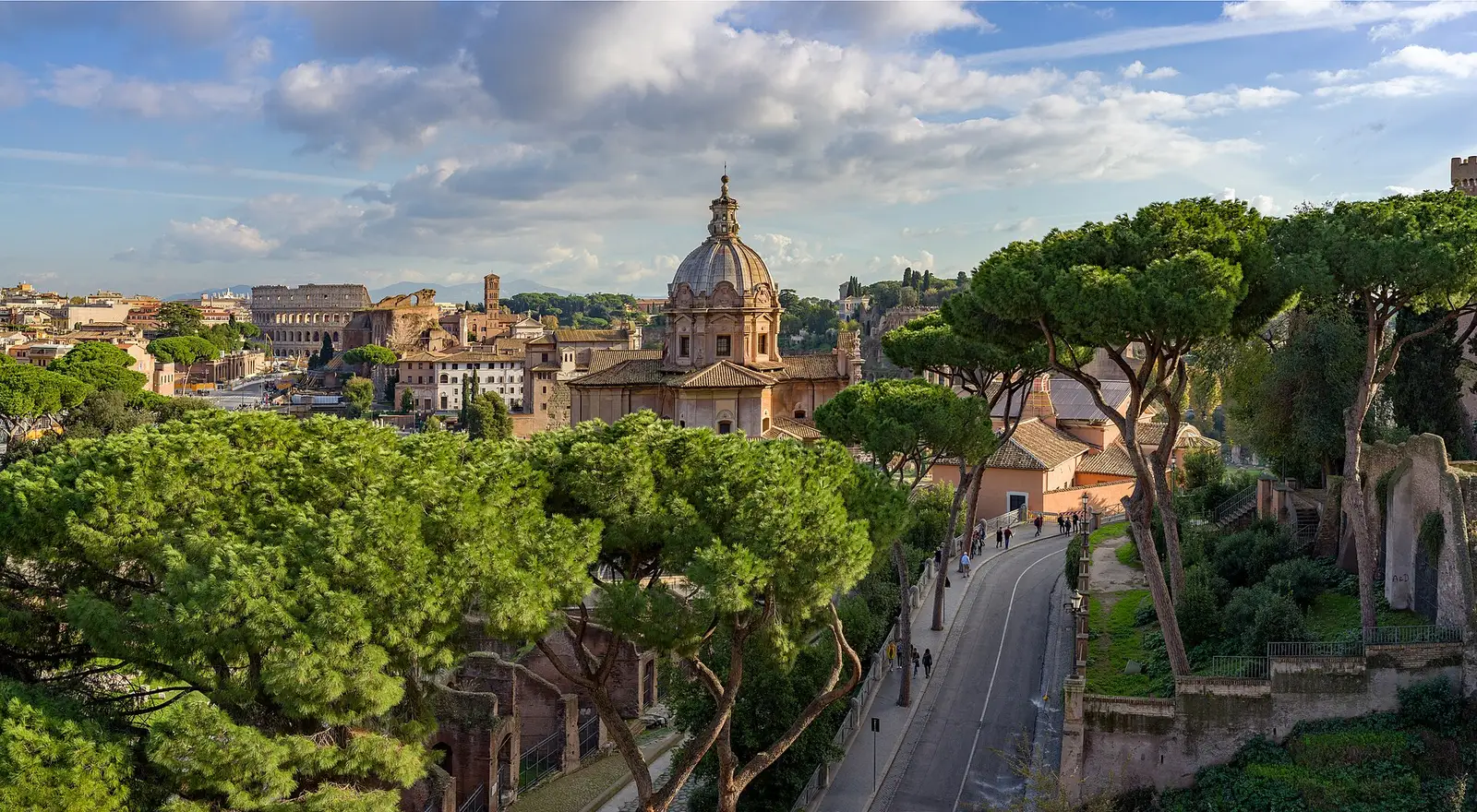
Latin is the language of Cicero and Virgil, of the Roman law that shaped Europe's legal systems, of medieval science and of the names of every plant and animal. It is the mother of French, Italian, Spanish, Portuguese and Romanian, and a large share of English vocabulary comes from it, directly or through French. Calling it "dead" is half true at most.
At a glance: UNESCO does not list Latin as endangered — it has no first-language speakers, so it counts as a classical language (UNESCO Atlas 2010). It remains the language of the Catholic Church's most solemn acts, has a Pontifical Academy (2012), a dictionary of modern Latin words, and 539,000 learners in German schools alone (Destatis).
Is Latin a dead language?
In the linguist's sense, yes: nobody grows up speaking Latin at home. That is exactly why the UNESCO Atlas of the World's Languages in Danger leaves it out — endangerment is measured by whether children still learn a language, and the Atlas excludes "classical languages such as Latin" (UNESCO Atlas 2010, p. 33).
But a language with no native speakers can still be read, written, spoken and loved. Latin never stopped being all four. Its story is not one of a revival but of unbroken use by learners — which is why it matters for every small language today: a language can survive in the hands of people who choose to learn it.
Latin and the Vatican
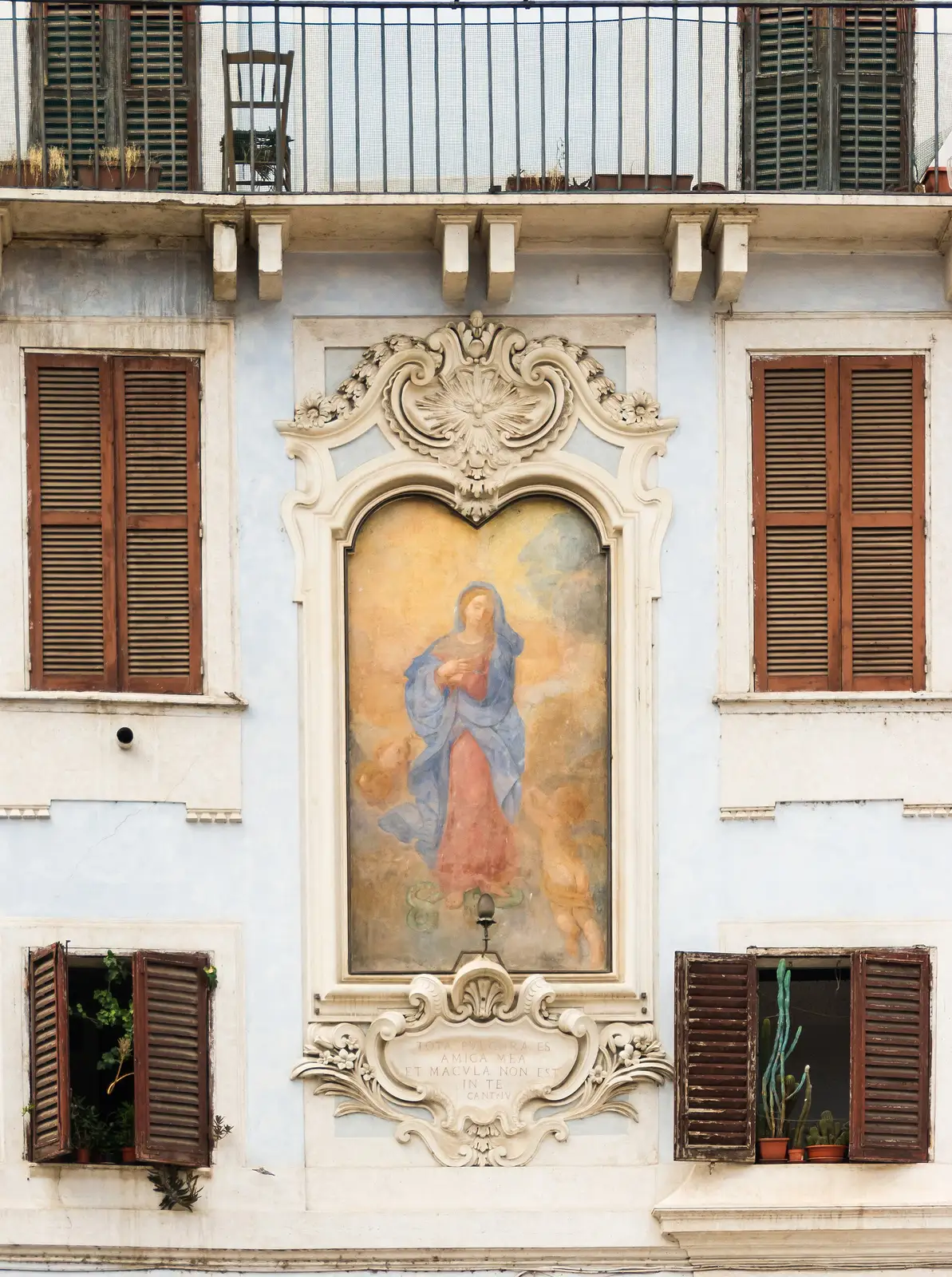
Two things are often confused. The Holy See — the government of the Catholic Church — uses Latin as "the Church's language": the authentic texts of the Roman Rite's liturgical books, the most important papal documents and the most solemn papal acts are written in it (Benedict XVI, Latina Lingua, 2012). Vatican City State, the small territory, legislates and works in Italian: its Fundamental Laws — most recently reissued on 31 July 2026 — name no official language at all (Vatican City State).
In 2012 Pope Benedict XVI founded the Pontifical Academy for Latin (Pontificia Academia Latinitatis) to promote Latin "both as a written and as a spoken language". It replaced the Latinitas Foundation, set up by Paul VI in 1976 (vatican.va).
Latin words for modern things
How do you say computer, email or football in Latin? The Latinitas Foundation compiled the Lexicon Recentis Latinitatis, a dictionary of Latin terms for modern concepts published by the Libreria Editrice Vaticana — first in 1992, as a single volume in 2003, and in a new edition in 2020 (according to library and publisher records). A language that keeps naming the new world is not finished.
Who learns Latin today?
| Country | What the official figures say |
|---|---|
| Germany | 539,000 pupils (6.4%) at general schools learned Latin in 2021/22 — more than Spanish (Destatis). |
| England | In 2021 Latin was taught at Key Stage 3 in only 2.7% of state schools, against 49% of independent schools (GOV.UK). A £4 million Latin Excellence Programme reached 40 state schools and over 5,000 pupils before it was ended early, in March 2025 (Schools Week). |
Where you can still hear Latin
- Nuntii Latini — Finland's public broadcaster Yle read the week's news in classical Latin for thirty years, from 1989 to June 2019, to about 40,000 regular listeners; the archive since 2011 is still online (Yle).
- Hebdomada Papae — Vatican Radio launched its own five-minute weekly Latin news bulletin in June 2019 (Vatican News).
- The Pope on X — the papal account in Latin, @Pontifex_ln, has posted since 2013 (NPR).
- Spoken Latin at university — the University of Kentucky has run a Latin-only summer Conventiculum since 1996, and offers a graduate certificate taught entirely in Latin, online since 2020 (University of Kentucky).
How did Latin sound? Classical and Church pronunciation
We know how Romans spoke from many kinds of evidence: how Greek writers spelled Latin names (Valeria as Oualeria, so v sounded like w), spelling mistakes on inscriptions, the rhythm of poetry and the descriptions of ancient grammarians (The Open University). German kept the old hard c: Caesar became Kaiser. The Church, meanwhile, pronounces Latin the Italian way (UC San Diego).
| Classical (restored) | Church (ecclesiastical) | |
|---|---|---|
| c before e, i | always hard: Cicero = "KIK-eh-ro" | "ch": Cicero = "CHEE-cheh-ro" |
| g before e, i | always hard | soft, as in gem |
| v | like English w | like English v |
| ae | like "aye" | like "ay" in say |
| veni, vidi, vici | "WAY-nee, WEE-dee, WEE-kee" | "VEH-nee, VEE-dee, VEE-chee" |
Both are correct — they are two traditions. Classical pronunciation is what most schools and universities teach today; Church pronunciation is what you hear at the Vatican and in choral music.
Listen: eight Latin words, recorded by people
These recordings use the classical pronunciation. Each comes from Wikimedia Commons, recorded by volunteers — and each is the root of English words you already know.
lingua
Meaning: language, tongue — hence “linguistics”
verbum
Meaning: word — hence “verb”, “verbal”
vox
Meaning: voice — hence “vocal”, “vowel”
liber
Meaning: book — hence “library”
magister
Meaning: teacher, master — hence “magistrate”, “master”
amicus
Meaning: friend — hence “amicable”
mater
Meaning: mother — hence “maternal”
vita
Meaning: life — hence “vital”, “vitamin”
Recordings: Wikimedia Commons — lingua by Erutuon (CC BY-SA 4.0); the others by EncycloPetey (CC BY-SA 3.0).
Four Latin proverbs to learn by heart
Repetitio est mater studiorum.
Literally: Repetition is the mother of studies.
Meaning: You become good at something by doing it many times — the idea behind 16Word itself.
Verba volant, scripta manent.
Literally: Words fly, written things remain.
Meaning: Spoken words are forgotten; what is written stays.
Gutta cavat lapidem.
Literally: The drop hollows the stone.
Meaning: Patient, steady effort finally achieves the goal.
Festina lente.
Literally: Hurry slowly.
Meaning: Act quickly, but with care.
Latin on 16Word
16Word teaches Latin the way it teaches English or French — with all eight tracks, and from any of 28 languages:
- Words — over 6,300, 16 a day, with spaced repetition and a game of Blocks between answers.
- Sentences — 436, from "Salve" to B2-level grammar, and 436 dialogues built on them.
- Travel — 100 situations, 1,600 lines: yes, you can order coffee in Latin.
- Proverbs & Idioms — 196 Latin sayings, from Carpe diem onwards, plus 64 expressions and 32 tongue twisters.
Honest about audio: 616 Latin words in 16Word have a recording by a person, from Wikimedia Commons. The rest still use a synthetic voice. If you speak Latin well — classical or Church — we would love you to record with us: partnerships@16word.com.
Why 16Word teaches a language nobody is born into
Latin is the proof that a language can live for two thousand years in the hands of people who choose to learn it. That is the future 16Word is building for every small and rare language:
- Rare languages on the same footing as English — every track, from every language, with no second-class content.
- Human voices first, recorded with their source, and a machine voice only where no person has recorded yet — never where none is good.
- Our own speech technology, on the device. The big speech platforms cover the large languages first and small ones late or never. We are building our own speech recognition and voices for the languages they leave out — starting with Luxembourgish — designed to run on the learner's own phone or computer, so a learner's voice is never sent to a third-party cloud.
- Native speakers record and correct. Every track has an editor's desk: native speakers join as audio editors for their language, record words, sentences and sayings in their own voice, and correct what is wrong. Each recording is kept with its source, so you always know whose voice you hear.
- More rare and small languages are on the way, built the same way: human sources first, native voices, every track. Write to partnerships@16word.com if your university, school or community wants to work with us.
Behind the app sits something larger. 16Word has gathered hundreds of thousands of words, expressions, sentences and proverbs — from old books, from literature and from people's memories. We are curating and preserving them, and adding them to 16Word step by step, to build a trustworthy, human-verified repository of language data: the kind of record that learners, researchers — and the AI systems of the future — will need, and that disappears with the last people who remember it if nobody writes it down.
Salve! Start Latin today
Choose Latin as the language you want to learn, and your own language as the one you speak. Words, sentences, dialogues, travel and 196 proverbs — every track has a free first page.
Frequently asked questions
Is Latin a dead language?
Latin has no native speakers, so UNESCO's Atlas of endangered languages leaves it out as a classical language. But it is still used: the most solemn papal documents are written in Latin, the Vatican has a Pontifical Academy for Latin, and universities run courses taught entirely in Latin.
What is the official language of Vatican City?
Separate the Holy See from Vatican City State. The Church and the Holy See use Latin for their most solemn official acts. Vatican City State's Fundamental Law, most recently reissued in July 2026, names no language and is written in Italian, the language the state works and legislates in.
Who creates Latin words for modern things?
The Vatican's Latinitas Foundation compiled the Lexicon Recentis Latinitatis, a dictionary of Latin terms for modern concepts published by the Libreria Editrice Vaticana from 1992, with a new edition in 2020. In 2012 the foundation was replaced by the Pontifical Academy for Latin.
How many students learn Latin?
In Germany, 539,000 pupils at general schools (6.4%) learned Latin in 2021/22, according to the federal statistics office Destatis. In England, the government said in 2021 that only 2.7% of state schools taught Latin at Key Stage 3, against 49% of independent schools.
What is the difference between classical and Church Latin pronunciation?
Classical pronunciation always has a hard c and g and pronounces v like English w, so Cicero is "Kikero". Church Latin follows Italian: c before e or i becomes "ch" ("Chichero") and v is a normal v.
Is there news in Latin?
Finland's Yle broadcast a weekly Latin news bulletin, Nuntii Latini, from 1989 until June 2019. Vatican Radio launched its own weekly Latin bulletin, Hebdomada Papae, in June 2019, and the Pope has posted in Latin on X since 2013.
Can I learn Latin for free on 16Word?
Yes — the first page of every Latin track is free: words, sentences, dialogues, the first travel situation and the first 16 proverbs. You can learn Latin from any of 16Word's 28 languages.
Official sources
- Benedict XVI — Latina Lingua (2012), vatican.va
- Vatican City State — Fundamental Laws
- UNESCO — Atlas of the World's Languages in Danger (2010, PDF)
- Destatis — Foreign languages at German schools 2021/22
- GOV.UK — Latin Excellence Programme announcement (2021)
- Yle — the end of Nuntii Latini (2019)
- Vatican News — Hebdomada Papae (2019)
- University of Kentucky — Institute for Latin Studies
- Allen & Greenough — Latin pronunciation (Dickinson College)
Keep going
- Proverbs & Idioms — up to 196 sayings per language
- Sentences — 436 per language, beginner to B2
- Sproochentest : déroulement, niveau requis et questions fréquentes
- The Dutch inburgering exam and Belgian nationality: levels, parts, fees and FAQ
- Luxembourgish proverbs: 16 sayings, what they mean, with native audio
- Working for the Luxembourg government: nationality, the three languages and the 2026 rules
- Working for the Dutch government: nationality, the Dutch level you need and screening
- Working for the Belgian government: nationality, language roles and certificates
- Endangered languages: why they disappear, how they come back, and what 16Word is building
- Luxembourgish: how a small language keeps growing