Luxembourg’s traditions and their words: from Liichtmëssdag to Kleeschen
Lanterns in February, bonfires in Lent, a pretzel for love, clay whistles on Easter Monday, a three-week funfair in summer and St Nicholas in December. Luxembourg’s year in its own words — what happens, and how to say it.
Updated · 5 min read
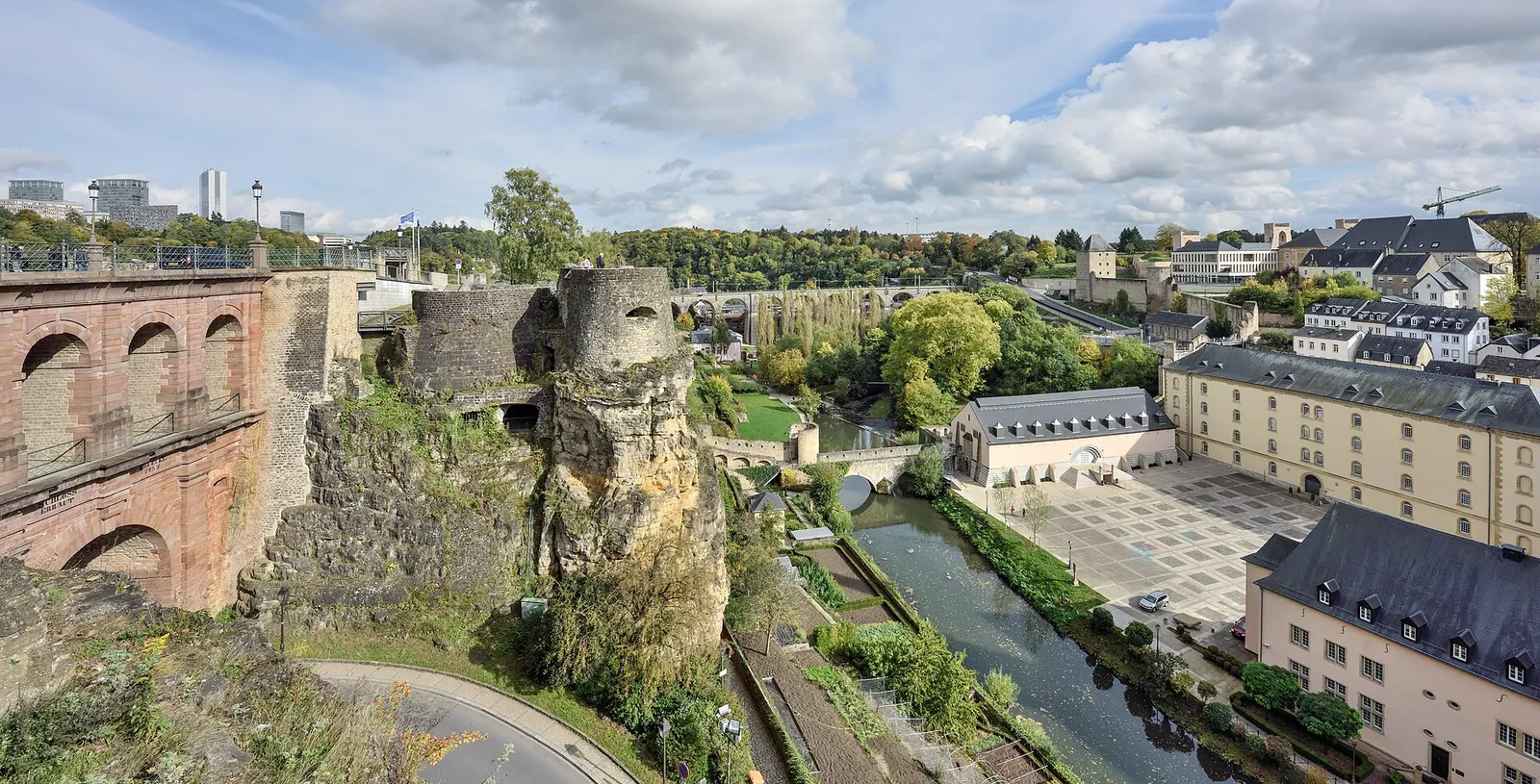
Traditions are where Luxembourgish is at its most Luxembourgish: the words for them often have no translation. The dates and customs below come from the government’s official site, luxembourg.public.lu; the recordings from the official dictionary. If you are new to the country, this is also a calendar of what you will be invited to. For everyday expressions, see 20 expressions every newcomer hears.
February: Liichtmëssdag and Fuesent
On 2 February children go from door to door with lanterns (Liichtebengelcher), singing a traditional song that begins Léiwer Härgottsblieschen, and receive sweets and coins.
Op Liichtmëssdag ginn d’Kanner mat Lampione vun Haus zu Haus sangen
Literally: On Candlemas, children go singing from house to house with lanterns.
Meaning: The verb is sangen.
From Liichtmëssdag to Ash Wednesday it is Fuesent — carnival: masked balls in almost every village and cavalcades in towns such as Diekirch, Esch-sur-Alzette, Remich, Pétange and Schifflange.
Ech verkleede mech all Joer anescht fir d’Fuesent
Literally: I dress up differently every year for carnival.
Mir hu fir d’Fuesent eng Woch Vakanz
Literally: We have a week of holidays for carnival.
Meaning: Schools close for a week — Vakanz means holidays.
Lent: Buergbrennen and Bretzelsonndeg
On the first Sunday after carnival, villages build huge bonfires — the Buerg — on the hills and light them after dark to chase winter away, often after a torchlight procession and with mulled wine.
Buergbrennen
Meaning: The bonfire festival itself.
Vill Leit sinn op d’Kopp komm, fir beim Buergbrennen derbäi ze sinn
Literally: Lots of people came up to the hilltop to be there for the bonfire.
On the fourth Sunday of Lent, Bretzelsonndeg, a man gives his sweetheart a sweet pretzel; at Easter she answers with an egg if she feels the same — or with an empty basket. In leap years the roles are reversed.
Fir Bretzelssonndeg hunn ech menger Freiesch eng Bretzel geschenkt
Literally: For Pretzel Sunday I gave my girlfriend a pretzel.
Seng Frëndin huet him gëschter de Kuerf ginn
Literally: His girlfriend gave him the basket yesterday.
Meaning: She dumped him — the empty basket of Easter became an idiom. More in love and friendship in sayings.
Easter: Klibberen and Éimaischen
Legend says the church bells fly to Rome after Holy Thursday; until Easter, children walk the streets with wooden rattles (Klibberen) to call people to prayer, and are rewarded with eggs and coins.
An der Karwoch ginn d’Kanner mat hire Klibberen duerch d’Stroossen
Literally: In Holy Week the children go through the streets with their rattles.
On Easter Monday comes Éimaischen, a folk market in the old town of Luxembourg City and in the village of Nospelt, famous for the Péckvillchen — clay birds that whistle like a cuckoo when you blow into them.
Éimaischen
All Enkelkand krut vun der Bomi e Péckvillche geschenkt
Literally: Every grandchild got a clay whistle-bird from Grandma.
Spring: the Oktav and the hopping procession
From the third Sunday after Easter, the Oktav brings parishes from all over the country and the border regions on a two-week pilgrimage to the statue of the Virgin Mary in Luxembourg City’s cathedral, with a little market (Mäertchen) beside it. On Whit Tuesday, Echternach holds its hopping procession in honour of St Willibrord, recognised by UNESCO as intangible cultural heritage.
Oktav
Meaning: The pilgrimage in honour of Our Lady of Luxembourg.
Vill Touriste kommen all Joer d’Sprangpressessioun kucken
Literally: Lots of tourists come every year to watch the hopping procession.
Meaning: The verb is kucken, to watch.
June: National Day
The Grand Duke’s official birthday is celebrated on 22 and 23 June with the changing of the guard, a torchlight procession, fireworks and a military parade — and the national anthem everywhere.
Mir ginn all Joer um Virowend vum Nationalfeierdag d’Freedefeier an d’Stad kucken
Literally: Every year on the eve of National Day we go into town to watch the fireworks.
Late summer: Schueberfouer and the Kiermes
The Schueberfouer, held on the Glacis in Luxembourg City from late August to early September, goes back to 1340. Around two million visits a year, about 200 rides and stalls — and the Hämmelsmarsch, a musical sheep march that opens the fair. Villages have their own fair, the Kiermes, for their patron saint.
Mir loossen eis et kee Joer entgoen, en Tour iwwer d’Schueberfouer ze maachen
Literally: We never miss a year without a stroll round the Schueberfouer.
Op der Kiermes iessen ech ëmmer Gromperekichelcher mat Äppelkompott
Literally: At the fair I always eat potato fritters with apple sauce.
Den zweete Sonndeg am November ass bei eis am Duerf Kiermes
Literally: The second Sunday in November is the fair in our village.
The fair gave the language one of its best proverbs — Et ass net all Dag Kiermes, life is not a fair every day. More in village life in Luxembourgish sayings.
December and January: Kleeschen, Christmas, Three Kings
On 6 December St Nicholas — de Kleeschen — brings presents to children, with his dark companion, the Houseker, who carries twigs for the naughty ones. It is a school holiday in primary school.
D’Kanner freeë sech schonn, an dräi Deeg kënnt de Kleeschen
Literally: The children are already excited — St Nicholas comes in three days.
Wann s de dech net schécks, da bréngt den Houseker der eng Rutt!
Literally: If you don’t behave, the Houseker will bring you a switch!
Chrëschtdag feiere mir doheem, Stiefesdag fuere mer bei meng Elteren
Literally: We celebrate Christmas Day at home; on St Stephen’s Day we drive to my parents’.
De 6. Januar ass Dräikinneksdag
Literally: 6 January is Epiphany.
Meaning: Celebrated with a cake that hides a bean — whoever finds it is king for the day.
Words for celebrating
The verbs behind all of this: feieren (to celebrate), invitéieren (to invite), sangen (to sing), danzen (to dance), iessen and drénken. For wishes, see happy New Year, cheers and good luck; for food, food and drink sayings and food words with audio. Families with children will meet many of these customs at school — see school and childcare words. For the invitations themselves: family words, words for the home, greetings — and, for Bretzelsonndeg, how to say I love you.
Being invited is the best way to learn. If you want to arrive able to chat, practise first: on Edluxio you can book 1-to-1 online lessons with independent teachers, native speakers among them. Book a trial lesson; if your first lesson isn’t right for you, you get a full refund.
Learn the Luxembourgish you need for the year
16Word teaches everyday Luxembourgish with native recordings — 16 words a day, five minutes, with a Blocks break between answers.
Keep learning
- Ons Heemecht: the national anthem, words and history
- Where Luxembourg’s motto comes from
- The first writers in Luxembourgish
- Where Luxembourgish proverbs come from
- Village life in Luxembourgish sayings
- 20 expressions every newcomer hears
- Is Luxembourgish a language or a dialect?
- The languages of Luxembourg
- A small language that is growing
- Day trips from Luxembourg City by train and bus
- How to say hello · thank you · how are you
- Cheers in Luxembourgish · good luck
- How to learn Luxembourgish online
- Is Luxembourgish hard to learn?
- Every Luxembourgish verb table, with audio
- All free Luxembourgish resources
- Free Luxembourgish level test
Frequently asked questions
What is Liichtmëssdag?
Candlemas, 2 February: children go from house to house with lanterns, singing “Léiwer Härgottsblieschen” for sweets and coins.
What is Buergbrennen?
On the first Sunday after carnival, villages light big bonfires on the hills to chase away winter.
What is Éimaischen?
The Easter Monday folk market in Luxembourg City’s old town and in Nospelt, known for the Péckvillchen, clay birds that whistle like a cuckoo.
When is the Schueberfouer?
From late August to early September on the Glacis in Luxembourg City. It dates back to 1340.
Who is the Houseker?
St Nicholas’s dark companion, who carries twigs for children who have misbehaved.
When is Luxembourg’s National Day?
On 23 June, with celebrations starting on the evening of 22 June.
Was this guide useful?
Official sources
Keep going
- Learn Luxembourgish with native LOD audio
- Where our recordings and texts come from
- Sproochentest : déroulement, niveau requis et questions fréquentes
- The Dutch inburgering exam and Belgian nationality: levels, parts, fees and FAQ
- Luxembourgish proverbs: 16 sayings, what they mean, with native audio
- Working for the Luxembourg government: nationality, the three languages and the 2026 rules
- Working for the Dutch government: nationality, the Dutch level you need and screening
- Working for the Belgian government: nationality, language roles and certificates
- Endangered languages: why they disappear, how they come back, and what 16Word is building
- Is Latin a dead language? Where Latin lives today — and how to learn it
- Luxembourgish: how a small language keeps growing
- How to learn Luxembourgish online: free and paid options compared
- Luxembourgish personal pronouns: ech, du, hien, hatt, si, mir, dir — with audio
- How to conjugate Luxembourgish verbs in the present tense
- Luxembourgish irregular verbs: sinn, hunn, goen, kommen and the modals
- Luxembourgish word order: verb second, verb last and separable verbs
- The Luxembourgish n-rule (Eifeler Regel) explained with examples
- Negation in Luxembourgish: net, keen, keng, näischt, ni and dach
- How to ask questions in Luxembourgish: wat, wien, wéini, wou, wéi, firwat
- The Luxembourgish past tense: perfect with hunn or sinn, and war and hat
- 100 everyday Luxembourgish verbs with meanings, present and past
- 32 Luxembourgish greetings and everyday phrases, with audio
- Sproochentest speaking (A2): topics, picture description and how to prepare
- Sproochentest, épreuve orale (A2) : thèmes, description d'image et préparation
- Sproochentest listening (B1): the three recordings and how to practise
- Sproochentest, compréhension orale (B1) : les trois enregistrements et comment s'entraîner
- A 60-day Sproochentest preparation plan, week by week
- Plan de préparation au Sproochentest en 60 jours, semaine par semaine
- Luxembourgish levels A1 to B2: what each CEFR level means in practice
- How to pronounce Luxembourgish: vowels, diphthongs and consonants with audio
- Luxembourgish spelling: capitals, long vowels, ë é ä, d' and the n-rule
- Luxembourgish at the doctor and the pharmacy: words and sentences with audio
- Shopping and eating out in Luxembourgish: ordering, prices and paying
- Apprendre le luxembourgeois quand on parle français : le guide du débutant
- Aprender luxemburguês: guia para quem fala português
- Is Luxembourgish hard to learn? An honest guide for beginners
- Le luxembourgeois est-il difficile à apprendre ? Le guide honnête pour débutants
- Is Luxembourgish a language or a German dialect? History, law and the differences
- Le luxembourgeois est-il une langue ou un dialecte allemand ? Histoire, loi et différences
- What language is spoken in Luxembourg? Luxembourgish, French and German explained
- Quelle langue parle-t-on au Luxembourg ? Luxembourgeois, français et allemand expliqués
- Which language should you learn first when moving to Luxembourg?
- Quelle langue apprendre en premier en s'installant au Luxembourg ?
- Luxembourgish vs Dutch: how close are they?
- Luxembourgeois et néerlandais : à quel point sont-ils proches ?
- Best apps to learn Luxembourgish (and is it on Duolingo?)
- Les meilleures applications pour apprendre le luxembourgeois (et Duolingo ?)
- 12 common mistakes learners make in Luxembourgish (and how to fix them)
- 12 erreurs courantes en luxembourgeois (et comment les corriger)
- Free ways to learn Luxembourgish — and the 200-hour language leave
- Apprendre le luxembourgeois gratuitement — et le congé linguistique de 200 heures
- Is Luxembourgish worth learning? Work, citizenship and everyday life
- Faut-il apprendre le luxembourgeois ? Travail, nationalité et vie quotidienne
- What level of Luxembourgish do you need for citizenship?
- Where Luxembourgish proverbs come from: a short history of the country’s sayings
- Luxembourgish idioms: 30 everyday expressions and what they really mean
- Luxembourgish animal idioms and proverbs: cats, dogs, donkeys and wolves
- Head, nose and heart: Luxembourgish idioms about the body
- Luxembourgish food and drink sayings: hunger, soup, cherries and potatoes
- Money and work in Luxembourgish proverbs: what Luxembourgers say about earning and spending
- Love, friends and family in Luxembourgish sayings
- Patience, luck and timing: Luxembourgish sayings about time
- Luxembourgish tongue twisters: 15 real sentences to train the hardest sounds
- The same proverb in English, French and Luxembourgish: 27 sayings compared
- 20 Luxembourgish expressions every newcomer hears (and what they mean)
- Ons Heemecht: Luxembourg’s national anthem — words, translation and history
- “Mir wëlle bleiwe wat mir sinn”: where Luxembourg’s national motto comes from
- The first writers in Luxembourgish: Meyer, Lentz, Dicks and Rodange
- Kiermes, priests and Prussians: the village life behind Luxembourgish sayings
- Luxembourg Airport to the city centre: tram, bus and taxi (free public transport)
- Free public transport in Luxembourg: how it works — and what is not free
- Entering Luxembourg: Schengen, passports, the EES and ETIAS (2026)
- Luxembourgish for public transport: bus, train and travel phrases with audio
- Luxembourg to Paris by train: TGV in about 2h10, fares from €25
- Luxembourg to Brussels and Belgium: hourly trains, €21.30, no booking needed
- Luxembourg to Germany by train: Koblenz, Cologne, Frankfurt, Munich and Berlin
- Luxembourg to Trier and the Moselle: trains in 50 minutes, buses from €3
- Luxembourg to Amsterdam and the Netherlands by train: three routes compared
- Luxembourg to Metz, Nancy and Strasbourg: trains, buses and free border stops
- Luxembourg to Lyon, Marseille and the south of France by direct TGV
- Luxembourg to Basel, Zurich and Switzerland by train: three routes
- Luxembourg to London by train or plane: Eurostar via Brussels or Paris
- Luxembourg to Portugal: flights, trains over two days, and coaches
- Luxembourg to Italy by train: Milan and Turin in a day, via Paris or Zurich
- Luxembourg to Barcelona, Madrid and Spain: by train in a day, or fly
- Airports near Luxembourg: Findel, Frankfurt, Brussels and Charleroi compared
- Commuting to Luxembourg from France, Belgium or Germany: trains, buses and passes
- Driving in and to Luxembourg: speed limits, rules, fuel and tolls next door
- Day trips from Luxembourg City by free train and bus
- Luxembourg to Vienna, Salzburg and Austria by train — in a day or overnight
- Luxembourg to Prague, Warsaw and Kraków by train in a day
- Night trains within reach of Luxembourg: Nightjet from Koblenz, Paris to Nice
- Luxembourg to Copenhagen and Scandinavia by train (or plane)