Endangered languages: why they disappear, how they come back, and what 16Word is building
Around 40% of the world's languages are at risk, and one is lost every two weeks. How UNESCO measures the danger, how Hebrew, Manx and Cornish came back — and what 16Word is building so that small languages are learned, heard and kept.
Updated · 9 min read

A language rarely disappears in a single day. It fades: parents stop speaking it to their children, it leaves the school, the office and the screen, and one day only the oldest people in a village still dream in it. When the last of them is gone, the songs, the jokes, the names of plants and the way of seeing the world that lived in that language go too — unless someone has written them down and recorded them.
At a glance: UNESCO counts 8,324 languages, of which around 7,000 are still in use and around 40% are at risk (UNESCO). The UN says the world loses a language every two weeks. 2022–2032 is the UN International Decade of Indigenous Languages. Revival is possible — Hebrew, Manx and Cornish prove it — but only where the language was documented and people choose to speak it.
How many languages are endangered?
UNESCO's World Atlas of Languages counts 8,324 languages, spoken or signed — including some no longer in use (UNESCO, 2021). About 7,000 are still in use, and UNESCO estimates that around 40% of them are at risk of disappearing; "every two weeks, the world loses a language" (UNESCO, 2024; UN).
The imbalance is stark. According to UNESCO's expert group, about 97% of the world's people speak about 4% of its languages — and about 96% of languages are spoken by just 3% of people (UNESCO, 2003). Only a few hundred languages are really used in schools and public life, and fewer than a hundred in the digital world (UN).
Why totals differ: you will see 6,000, 6,700 and 8,324 quoted. They come from different UNESCO publications (2003, 2019 and the 2021 World Atlas) using different methods. This guide uses the newest one.
How UNESCO measures the danger
UNESCO grades a language mainly by one question: are children still learning it? The 2010 Atlas of the World's Languages in Danger uses six levels (UNESCO Atlas 2010; UNESCO 2003):
| Level | What it means |
|---|---|
| Safe | All generations speak it; parents pass it on without interruption. |
| Vulnerable | Most children speak it, but perhaps only at home. |
| Definitely endangered | Children no longer learn it as their mother tongue at home. |
| Severely endangered | Only grandparents speak it; parents may understand but do not pass it on. |
| Critically endangered | The youngest speakers are great-grandparents, and they speak it rarely. |
| Extinct | No one can speak or remember the language. |
Transmission is not the only factor. UNESCO's experts weigh nine: transmission between generations, the number of speakers, their share of the population, where the language is used, whether it reaches new domains and media, teaching materials, government policy, the community's own attitude — and the amount and quality of documentation (UNESCO, 2003). Even "safe" is no guarantee: speakers can stop passing a language on at any time.
Why languages disappear
- Pressure from outside — military, economic, religious, cultural or educational domination by a bigger language (UNESCO, 2003).
- Pressure from inside — a community that comes to see its own language as a handicap. People often give it up hoping to escape discrimination, find work or move up.
- New domains go to the big language. Schools, new workplaces and new media, including the Internet, "usually serve only to expand the scope and power of the dominant language".
- The chain breaks at the children. Once parents stop speaking it at home, a language can vanish in two or three generations. UNESCO's experts warned in 2003 that in most regions about 90% of languages may be replaced by dominant ones by the end of this century.
Can a language come back?
Yes — and the examples teach the same lessons.
Hebrew
For many centuries Hebrew had no native speakers, but it never stopped being read, written, prayed and studied. Its return as an everyday mother tongue — linguists call it re-vernacularisation — happened in Ottoman Palestine in the early 20th century. By 1916–18 more than 75% of young people in the new settlements used Hebrew as their only or main language, and it spread from children to parents: "in many cases, the children became the teachers of their parents". The popular story that Eliezer Ben-Yehuda revived it alone is, in the words of linguist Shlomo Izre'el, "a myth"; it took schools and a whole community (Izre'el, Tel Aviv University.pdf)).
Manx and Cornish
UNESCO calls Manx and Cornish "uncontested representatives of the category of revived languages in Europe". The last native speaker of Manx, Ned Maddrell, died in 1974; people who had learned from him kept the language alive, and it has spread again through schools on the Isle of Man. Cornish stopped being a first language around the end of the 18th century, and its revival since then has been "largely successful" (UNESCO Atlas 2010, p. 38).
Welsh — an honest picture
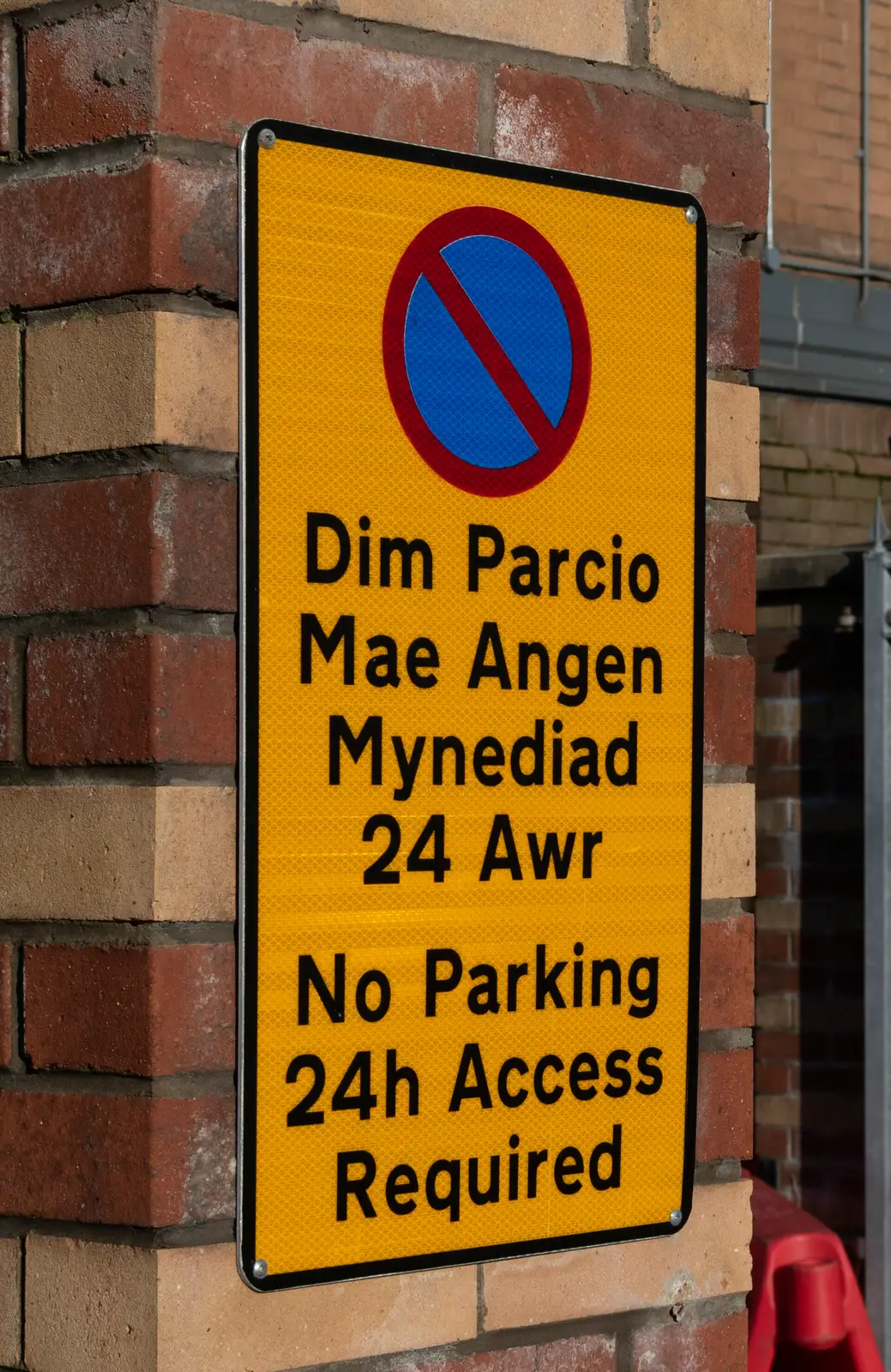
Welsh is often held up as a success, and its public presence is real. But in the 2021 census about 538,000 people in Wales (17.8%) said they could speak Welsh, down from 19.0% in 2011 — mainly because fewer children aged 3–15 did (ONS). The Welsh Government's Cymraeg 2050 strategy aims for a million speakers by 2050 and to double the share who use Welsh every day (Welsh Government). Signs and laws help; what decides is whether people speak it.
What every revival has in common: good documentation ("without adequate documentation, a language that is extinct can never be revived"), children learning it in daycare and school, modern uses in work, media and daily life — and the will of the speakers: "in the end, it is the speakers, not outsiders, who maintain or abandon languages" (UNESCO, 2003).
The UN Decade of Indigenous Languages, 2022–2032
After the International Year of Indigenous Languages in 2019 (resolution 71/178), the UN General Assembly declared 2022–2032 the International Decade of Indigenous Languages (resolution 74/135). Led by UNESCO, it aims "to draw global attention on the critical situation of many indigenous languages and to mobilize stakeholders and resources for their preservation, revitalization and promotion", with a Global Action Plan covering education, digital inclusion and heritage (UNESCO).
The people who record: Lingua Libre and Wikimedia Commons
Some of the most useful work is done by volunteers. Lingua Libre, run by Wikimedia France since 2015, lets anyone record words in their language; an experienced speaker can record about a thousand words an hour, and every file goes to Wikimedia Commons under a free licence (usually CC BY-SA 4.0), from where it reaches Wiktionary and Wikidata (Meta-Wiki). It was created to "promote and preserve endangered regional languages" (Wikimedia Foundation). 16Word uses these recordings — always credited — before it ever considers a machine voice.
What 16Word is building
16Word began as a simple idea: learn 16 words a day in five minutes, with active recall, spaced repetition and a game of Blocks between answers so the words stick. It has become something more: a place where small and rare languages are learned on the same footing as the big ones — and kept.
- Every language from every language. 16Word teaches 28 languages, and you can learn any of them from any other. Luxembourgish and Latin get the same eight tracks as English: words, sentences from beginner to B2, dialogues, 100 travel situations, proverbs and idioms, expressions, phrasal verbs and tongue twisters.
- Human voices first. Every one of the 6,373 Luxembourgish words in 16Word has a recording by a person — from the national dictionary LOD, from Wikimedia Commons, or from our own recorders. Every Urdu word is recorded by people too: where no good machine voice exists, we use none.
- Our own speech technology, on the device. The big speech platforms cover the large languages first and small ones late or never. We are building our own speech recognition and voices for the languages they leave out — starting with Luxembourgish — designed to run on the learner's own phone or computer, so a learner's voice is never sent to a third-party cloud.
- Native speakers record and correct. Every track has an editor's desk: native speakers join as audio editors for their language, record words, sentences and sayings in their own voice, and correct what is wrong. Each recording is kept with its source, so you always know whose voice you hear.
- More rare and small languages are on the way, built the same way: human sources first, native voices, every track.
- Open to collaboration. Universities, schools, cultural institutions, archives and language communities who want to bring a language back into daily use can work with us — on recordings, on texts, on courses. Write to partnerships@16word.com.
Behind the app sits something larger. 16Word has gathered hundreds of thousands of words, expressions, sentences and proverbs — from old books, from literature and from people's memories. We are curating and preserving them, and adding them to 16Word step by step, to build a trustworthy, human-verified repository of language data: the kind of record that learners, researchers — and the AI systems of the future — will need, and that disappears with the last people who remember it if nobody writes it down.
Why it matters for the future: AI systems learn languages from what has been written and recorded. Languages with little data are served badly, then used less, then have even less data. A careful, human-checked record — with sources — is how a small language stays in the future's vocabulary.
Learn a small language, 16 words at a time
Luxembourgish with native LOD audio, Latin with its proverbs, and 26 other languages — five minutes a day, with a game of Blocks between answers. Every track has a free first page.
Frequently asked questions
How many languages are endangered in the world?
UNESCO estimates that around 40% of the world's 8,324 known languages are at risk of disappearing. About 7,000 languages are still in use, and the printed 2010 UNESCO Atlas lists around 2,500 endangered languages.
How often does a language die?
UNESCO and the United Nations both say the world loses a language every two weeks — and with it a cultural and intellectual heritage.
What are UNESCO's levels of language endangerment?
Six levels: safe, vulnerable, definitely endangered, severely endangered, critically endangered and extinct. The main test is whether children still learn the language; "definitely endangered" means children no longer learn it as their mother tongue at home.
Why do languages die?
Because speakers stop passing them on to their children — often under economic, cultural or educational pressure from a dominant language, or hoping to avoid discrimination and improve their prospects. Schools and new media usually spread the dominant language further.
Can a dead or dying language be revived?
Yes. Hebrew became an everyday mother tongue again in the early 20th century, and UNESCO calls Manx and Cornish clear examples of revived languages in Europe. A revival needs good documentation — grammars, dictionaries and recordings of real speech — and people who choose to speak the language.
What is the International Decade of Indigenous Languages?
A UN decade, 2022–2032, declared by the General Assembly in resolution 74/135 and led by UNESCO, to draw attention to the critical situation of many indigenous languages and to mobilise people and resources to preserve, revitalise and promote them.
How can I help preserve an endangered language?
Learn it and use it, record it, and share recordings under a free licence — for example through Lingua Libre on Wikimedia Commons. If you are a native speaker of a small language, you can also join 16Word as an audio editor and record words, sentences and sayings for learners.
Which small or rare languages can I learn on 16Word?
Among 16Word's 28 languages are Luxembourgish (every word recorded by people) and Latin, each with all eight tracks: words, sentences, dialogues, travel, proverbs and idioms, expressions, phrasal verbs and tongue twisters. More rare and small languages are on the way.
Official sources
- UNESCO — World Atlas of Languages (2021)
- UNESCO — Expert meeting on the World Atlas of Languages (2024)
- United Nations — International Mother Language Day
- UNESCO Expert Group — Language Vitality and Endangerment (2003, PDF)
- UNESCO — Atlas of the World's Languages in Danger, 3rd ed. (2010, PDF)
- UNESCO — International Decade of Indigenous Languages 2022–2032
- Shlomo Izre'el — The Emergence of Spoken Israeli Hebrew (PDF)
- ONS — Welsh language, Census 2021
- Welsh Government — Cymraeg 2050 (PDF)
- Meta-Wiki — Lingua Libre
Keep going
- Learn Luxembourgish with native LOD audio
- Where our recordings and texts come from
- Sproochentest : déroulement, niveau requis et questions fréquentes
- The Dutch inburgering exam and Belgian nationality: levels, parts, fees and FAQ
- Luxembourgish proverbs: 16 sayings, what they mean, with native audio
- Working for the Luxembourg government: nationality, the three languages and the 2026 rules
- Working for the Dutch government: nationality, the Dutch level you need and screening
- Working for the Belgian government: nationality, language roles and certificates
- Is Latin a dead language? Where Latin lives today — and how to learn it
- Luxembourgish: how a small language keeps growing