Days of the week in Dutch: maandag to zondag
The days of the week in Dutch are maandag, dinsdag, woensdag, donderdag, vrijdag, zaterdag and zondag — Monday to Sunday, every one ending in -dag (day). They are written with a small letter, and four of them are named after Germanic gods. This guide gives each day with its pronunciation and origin, the short forms you see on timetables, how to say "on Monday", "every Monday" and "Monday morning", and the words around them: vandaag, morgen, gisteren and het weekend, with recordings. New to Dutch? Start with the free Dutch level test or the Dutch page.
Updated · 8 min read
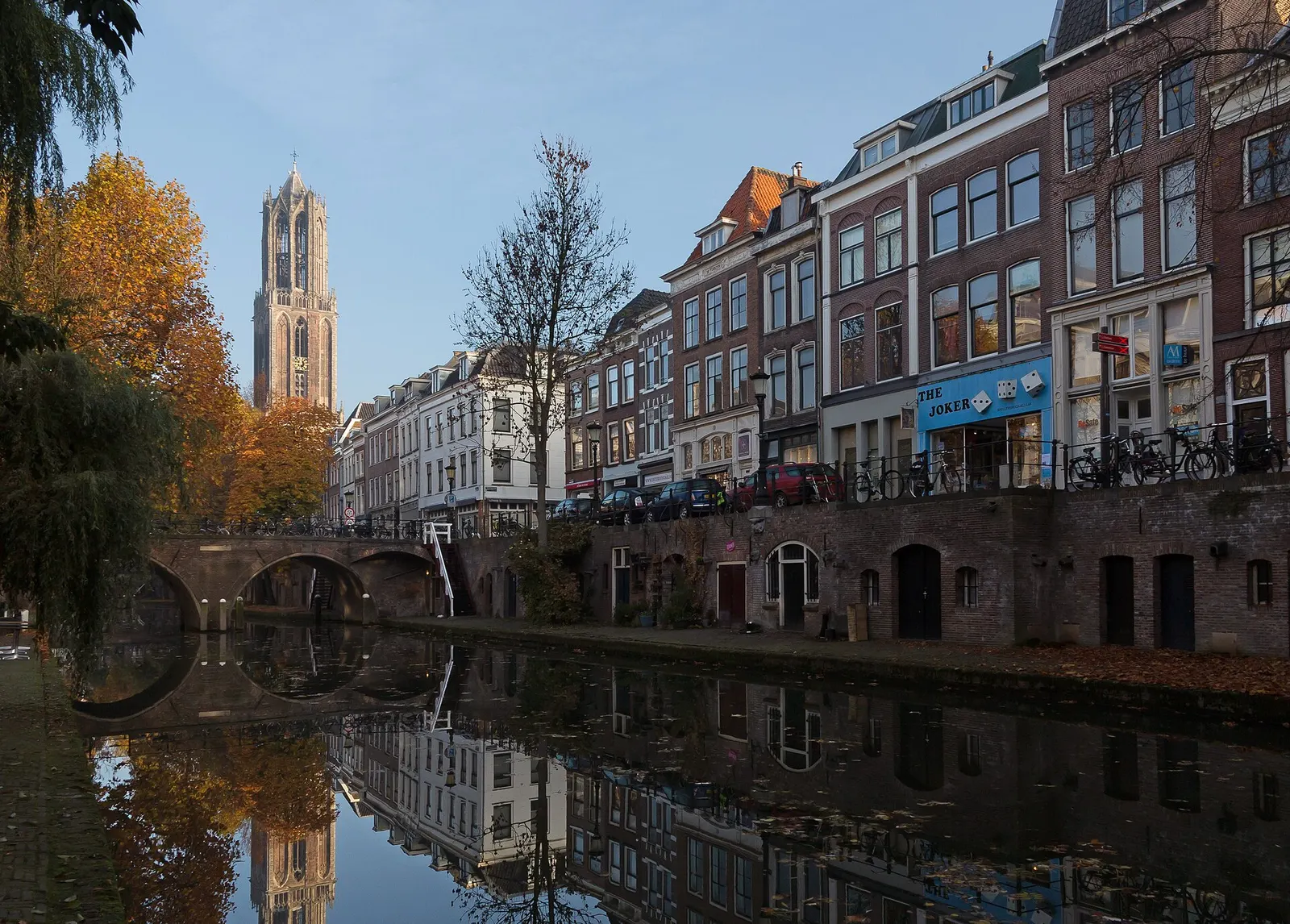
The days of the week in Dutch at a glance
| English | Dutch | IPA | Short | Named after |
|---|---|---|---|---|
| Monday | maandag | /ˈmaːn.dɑx/ | ma | the moon (maan) |
| Tuesday | dinsdag | /ˈdɪns.dɑx/ | di | Thingsus (Tiw, Týr), god of justice |
| Wednesday | woensdag | /ˈʋuns.dɑx/ | wo | Wodan (Woden) |
| Thursday | donderdag | /ˈdɔn.dərˌdɑx/ | do | Donar (Thor), god of thunder |
| Friday | vrijdag | /ˈvrɛi̯ˌdɑx/ | vr | Frija (Friia), goddess of love |
| Saturday | zaterdag | /ˈzaːtərˌdɑx/ | za | Saturn |
| Sunday | zondag | /ˈzɔnˌdɑx/ | zo | the sun (zon) |
The pronunciations are Wiktionary's (maandag, dinsdag, woensdag, donderdag, vrijdag, zaterdag, zondag). Three things make them easy: the stress is always on the first syllable, -dag is always /dɑx/ with the throaty Dutch g at the end, and all seven are masculine de-words with the plural -dagen — de maandag, twee maandagen. Watch oe in woensdag (like English "oo") and ij in vrijdag (close to "eye"); the Dutch pronunciation guide has both with audio, and de or het explains the article. Below are recordings from Wikimedia Commons for four of the days. Tuesday, Wednesday and Thursday have no recording here yet — you can hear and practise all seven in the Numbers & Time word list.
maandag
Literally: Monday
vrijdag
Literally: Friday
zaterdag
Literally: Saturday
zondag
Literally: Sunday
Where the Dutch day names come from
- maandag — "day of the moon", from Middle Dutch manendach: maan + dag (Wiktionary).
- dinsdag — probably "day of Thingsus", the Germanic god of justice also known as Tiw or Týr; German Dienstag is the same word (Wiktionary).
- woensdag — "day of Woden", a translation of Latin dies Mercurii, the day of Mercury; Etymologiebank says it is named after the Germanic god Wodan (Wiktionary, Etymologiebank).
- donderdag — "day of the thunder god" Donar, known further north as Thor; donder is still the Dutch word in donderdag (Wiktionary).
- vrijdag — a translation of Latin dies Veneris, the day of Venus, given to Friia, the Germanic goddess of love (Etymologiebank, Wiktionary).
- zaterdag — "Saturn's day", from Latin dies Saturni; Middle Dutch wrote saterdach (Wiktionary).
- zondag — "day of the sun", Latin dies Solis: zon + dag (Wiktionary).
So three names translate the Latin planet days directly (moon, Saturn, sun), and for Wednesday, Thursday and Friday a Germanic god stands in for the Roman one. Dialects kept other forms too. Etymologiebank cites goensdag for Wednesday in Antwerp, Brussels and Brabant, and oensdag in West Flanders — you may still hear them, but standard Dutch writes woensdag (Etymologiebank). If you are curious how Flemish and Netherlands Dutch differ more widely, read Dutch vs Flemish.
Spelling: lower case, and ma, di, wo
Dutch writes days with a small letter: maandag, vrijdagavond. The Flemish government's Team Taaladvies puts it as a rule — words that divide up time, such as parts of the day, days, months and seasons, are written small (Team Taaladvies). Only the official name of a holiday gets a capital — Goede Vrijdag (Good Friday) — and the capitals in old spellings like Zaterdag and Zondag are marked obsolete or archaic (Wiktionary). On timetables and opening hours the days are cut to their first two letters, ma, di, wo, do, vr, za, zo, with or without a full stop; woe, vrij and zat also turn up (Rendement, WikiWoordenboek). So ma–vr 9.00–17.00 is "Monday to Friday, 9 to 5". More spelling: Dutch spelling rules.
How to use the days: op maandag, 's maandags, maandagochtend
| You want to say | Dutch | Note |
|---|---|---|
| (on) Monday | maandag / op maandag | the day alone works as "on Monday" |
| every Monday, on Mondays | 's maandags / elke maandag | 's = old genitive des |
| Monday morning | maandagochtend, maandagmorgen | one word |
| Monday afternoon / evening / night | maandagmiddag, maandagavond, maandagnacht | one word |
| on a weekday | doordeweeks | also "ordinary, everyday" |
| (at) the weekend | het weekend | neuter: het |
The day name on its own already means "on Monday" (Wiktionary), and op is common too — Wiktionary's zaterdag examples use both. For a habit, add an s: 's maandags means "every Monday, on Mondays"; the 's is what is left of des maandags, an old genitive (Wiktionary). Elke (every) does the same job: Wiktionary's own example is Elke woensdag ga ik naar yoga — every Wednesday I go to yoga (Wiktionary). Parts of the day join the day as one word — maandagochtend, vrijdagavond, zondagmiddag (Wiktionary, Wiktionary). Doordeweeks means "on a weekday" (Wiktionary). A few sentences of our own (examples, not dictionary quotes): Ik werk van maandag tot en met vrijdag. (I work Monday to Friday.) · Zaterdagochtend ga ik naar de markt. (On Saturday morning I'm going to the market.) · 's Zondags slaap ik uit. (On Sundays I sleep in.) The verbs: werken, gaan, beginnen. Note the word order: when the day comes first, the verb comes second — see Dutch word order.
ochtend
Literally: morning — maandagochtend, Monday morning
avond
Literally: evening — vrijdagavond, Friday evening
Today, tomorrow, yesterday — and the week
| Dutch | English | Note |
|---|---|---|
| eergisteren | the day before yesterday | informal eergister |
| gisteren | yesterday | informal gister |
| vandaag | today | van + dag |
| morgen | tomorrow | also the noun "morning" |
| overmorgen | the day after tomorrow | like German übermorgen |
| de week | the week | plural weken |
| het weekend | the weekend | also het weekeinde |
These come from Wiktionary (vandaag, morgen, gisteren, eergisteren, overmorgen, week, weekend); het weekend is neuter in the WikiWoordenboek too (WikiWoordenboek). Watch morgen: as an adverb it is "tomorrow", as a noun "morning", so morgenochtend is "tomorrow morning" and vanmorgen "this morning" (Wiktionary). Dag itself is also a greeting — dag! is hello or goodbye (Wiktionary); see the hello and goodbye pages and Dutch greetings. For months and the clock, our days, months and time guide covers half drie and the rest; for the weekend chat at work, Dutch small talk.
morgen
Literally: tomorrow; also morning
gisteren
Literally: yesterday
week
Literally: week
weekend
Literally: weekend
Learn the days — and the words around them
16Word teaches 16 words a day with active recall and spaced repetition, with Blocks breaks between answers. Free to start, Dutch included.
Mistakes English and German speakers make
- Capitals. Maandag only at the start of a sentence; mid-sentence it is maandag. English habit is the usual cause.
- "On Mondays". Don't translate the English plural word for word: Wiktionary gives 's maandags (or maandags) for "on Mondays", and elke maandag is "every Monday".
- Monday morning as two words. It is maandagochtend, one word; the same goes for vrijdagavond and zondagmiddag.
- Morgen. It is both "tomorrow" and "morning" — German speakers will recognise the double meaning. Morgenochtend (tomorrow morning) removes the doubt.
- Woensdag. Spelled oe, said like English "oo": /ˈʋuns.dɑx/. German speakers get dinsdag for free — it is the same word as Dienstag — but woensdag has to be learned.
- Zaterdag and zondag with a z. Both start with z, said like an English z, not s: /ˈzaːtərˌdɑx/, /ˈzɔnˌdɑx/.
Belgium: the day names are the same, but voormiddag is not. In Belgium it means the late morning, before noon; in the Netherlands around midday or early afternoon (Wiktionary). So dinsdagvoormiddag in a Flemish email means Tuesday morning. Living in Flanders? See learning Dutch in Brussels and Flemish inburgering. To practise saying all seven days out loud with a teacher, Edluxio offers live 1-to-1 lessons with teachers and professionals in many fields, with a trial lesson and a full refund if it isn't right.
Keep learning
- Word lists: Numbers & Time · Work & Office · School & Education · Common Words · all Dutch vocabulary
- Phrases: good morning · good night · numbers · happy birthday · the phrasebook
- Holidays: Dutch holidays and traditions · What is Sinterklaas? · Happy new year in Dutch
- Grammar: present tense · questions: wanneer? · Dutch grammar · Dutch verbs
- Everyday Dutch: on the phone and making appointments · at work · parents at school
- Other languages: days of the week in Spanish · in Luxembourgish
- Next steps: free Dutch resources · the inburgering exam · how many Dutch words you need · how to memorize vocabulary
Recordings (Wikimedia Commons, MP3 versions): maandag — GerardM, CC BY-SA 3.0; vrijdag — GerardM, CC BY-SA 3.0; zaterdag — GerardM, CC BY-SA 3.0; zondag — GerardM, CC BY-SA 3.0; ochtend — GerardM, CC BY-SA 3.0; avond — GerardM, CC BY-SA 3.0; morgen — eigen opname. GerardM, CC BY-SA 3.0; gisteren — GerardM, CC BY-SA 3.0; week — GerardM, CC BY-SA 3.0; weekend — GerardM, CC BY-SA 3.0.
Days of the week in Dutch: questions
What are the 7 days of the week in Dutch?
Maandag (Monday), dinsdag (Tuesday), woensdag (Wednesday), donderdag (Thursday), vrijdag (Friday), zaterdag (Saturday) and zondag (Sunday). All end in -dag, "day", and all are de-words.
Are Dutch days of the week capitalised?
No. Dutch writes days, months, seasons and parts of the day with a small letter, as the Flemish Team Taaladvies rule says: maandag, vrijdagavond. Only official holiday names such as Goede Vrijdag take a capital.
How do you abbreviate the days in Dutch?
With their first two letters: ma, di, wo, do, vr, za, zo, with or without a full stop. You will also see woe, vrij and zat. On a shop door, ma–za means Monday to Saturday.
What does 's maandags mean?
It means "on Mondays, every Monday". The 's is a shortened des: the phrase was once des maandags, a fossilised genitive. Elke maandag says the same thing.
Why is Wednesday woensdag in Dutch?
It is "Wodan's day", a Germanic translation of the Latin dies Mercurii, the day of Mercury. The word is built from Woen (Wodan), a linking -s- and dag.
Is morgen tomorrow or morning in Dutch?
Both. As an adverb morgen means tomorrow; as a noun de morgen means the morning, with ochtend as its synonym. Morgenochtend is tomorrow morning, vanmorgen this morning.
Are the days of the week different in Flemish?
No, standard Dutch in Belgium uses the same seven words. Some dialects say goensdag or oensdag for Wednesday, and voormiddag means the late morning in Belgium but around midday in the Netherlands.
Was this guide useful?
Official sources
- Wiktionary — maandag
- Wiktionary — dinsdag
- Wiktionary — woensdag
- Wiktionary — donderdag
- Wiktionary — vrijdag
- Wiktionary — zaterdag
- Wiktionary — zondag
- Wiktionary — 's maandags
- Wiktionary — doordeweeks
- Wiktionary — weekend (Dutch)
- Wiktionary — week (Dutch)
- Wiktionary — vandaag
- Wiktionary — morgen (Dutch)
- Wiktionary — gisteren
- Wiktionary — eergisteren
- Wiktionary — overmorgen
- Wiktionary — ochtend
- Wiktionary — voormiddag
- Wiktionary — dag (Dutch)
- WikiWoordenboek — maandag
- WikiWoordenboek — weekend
- Etymologiebank — woensdag
- Etymologiebank — vrijdag
- Team Taaladvies (Vlaamse overheid) — hoofdletters bij dagen en feestdagen
- Rendement — dagen en maanden voluit schrijven of afkorten?
- Wikimedia Commons — Dutch pronunciation (recordings, credited per word below)
- Edluxio — live 1-to-1 lessons with teachers and professionals
Keep going
- Free Dutch level test — A1 to B2, no sign-up
- /articles/happy-new-year-in-dutch
- Dutch greetings and everyday phrases (with audio)
- Dutch at the doctor and the pharmacy: phrases you need
- Dutch at the gemeente: registration, BSN, DigiD and the counter
- Dutch on the phone: making calls, appointments and messages
- Dutch for shopping and eating out: phrases you need
- Days, months and telling the time in Dutch (half drie is 2:30)
- Dutch small talk: the weather, the weekend and work
- Dutch for parents: school words and messages to the teacher
- All guides