Days of the week in Luxembourgish: Méindeg to Sonndeg, with audio
The days of the week in Luxembourgish are Méindeg, Dënschdeg, Mëttwoch, Donneschdeg, Freideg, Samschdeg and Sonndeg. Every word and sentence below comes from the Lëtzebuerger Online Dictionnaire (LOD), with its own recording, so you hear how Luxembourgers really say them. You will also learn the small grammar that makes them useful — e Méindeg, leschte Méindeg, méindes — and the words for today, tomorrow and the weekend. To see your level first, take the free Luxembourgish level test.
Updated · 5 min read
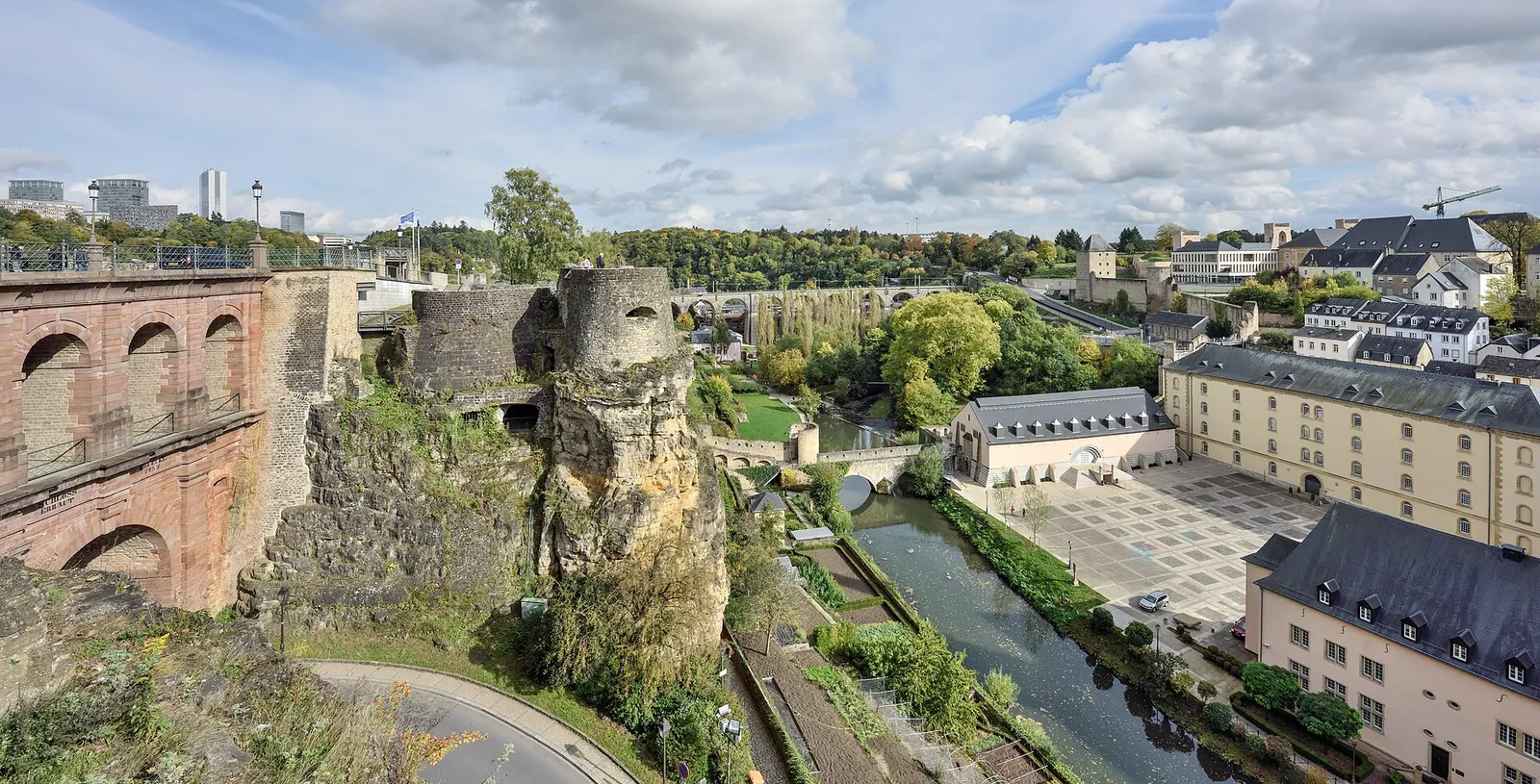
The days of the week in Luxembourgish, Monday to Sunday
| English | Luxembourgish | French (for comparison) |
|---|---|---|
| Monday | Méindeg | lundi |
| Tuesday | Dënschdeg | mardi |
| Wednesday | Mëttwoch | mercredi |
| Thursday | Donneschdeg | jeudi |
| Friday | Freideg | vendredi |
| Saturday | Samschdeg | samedi |
| Sunday | Sonndeg | dimanche |
Six of the seven end in -deg (from Dag, "day"), which LOD transcribes with a soft final sound — mˈɜɪndəɕ] for [Méindeg. Only Wednesday is different: Mëttwoch. Like all nouns, the days are written with a capital letter and are masculine: de Méindeg. Listen to each one:
Méindeg
Literally: Monday
Dënschdeg
Literally: Tuesday
Mëttwoch
Literally: Wednesday
Donneschdeg
Literally: Thursday
Freideg
Literally: Friday
Samschdeg
Literally: Saturday
Sonndeg
Literally: Sunday
If you speak German, you will recognise them; our guide Luxembourgish vs Dutch and Luxembourgish pronunciation show where the sounds differ. The spelling of ë and éi is explained in Luxembourgish spelling.
"Next Monday" and "last Monday": e Méindeg
Here Luxembourgish is cleverer than English. LOD shows that e Méindeg — literally "a Monday" — means the next Monday when you talk about the future and the last Monday when you talk about the past. LOD explains each example with the longer form:
Mir gesinn eis e Méindeg.
Literally: We'll see each other on Monday (= next Monday).
Ech sinn him e Méindeg begéint.
Literally: I met him on Monday (= last Monday).
You can also say it in full, with nächst (next), lescht (last) or dëse (this):
Kënns de deen nächste Méindeg bei eis iessen?
Literally: Are you coming to eat with us next Monday?
De Laboratoire huet mech leschten Dënschdeg ugeruff.
Literally: The laboratory called me last Tuesday.
D'Strooss ass bis nächsten Donneschdeg gespaart.
Literally: The road is closed until next Thursday.
Mir fléien dëse Freideg an d'Vakanz.
Literally: We're flying off on holiday this Friday.
Notice leschte Méindeg but leschten Dënschdeg and nächsten Donneschdeg: that final n comes and goes with the next word's first letter. It is the famous n-rule — kept before D, dropped before M or F.
"On Saturday": um Samschdeg
For a particular day, Luxembourgish uses um ("on the"):
Haut um Samschdeg sinn net vill Leit an der Stad.
Literally: Today, Saturday, there aren't many people in town.
Du kanns dach um Sonndeg net de Wues méien!
Literally: You can't mow the lawn on a Sunday!
LOD's second example says a lot about Sunday as a quiet day. More everyday sentences like these are in basic Luxembourgish sentences and Luxembourgish word order.
"On Mondays": méindes, dënschdes, mëttwochs…
For something that happens regularly, Luxembourgish has a separate word for each day, ending in -s and written with a small letter. LOD translates méindes as "(on) Monday(s), each Monday":
| Day | Every week / on that day |
|---|---|
| Méindeg | méindes |
| Dënschdeg | dënschdes |
| Mëttwoch | mëttwochs |
| Donneschdeg | donneschdes |
| Freideg | freides |
| Samschdeg | samschdes |
| Sonndeg | sonndes |
Méindes kommen ech ni gutt aus dem Bett.
Literally: On Mondays I never get out of bed well.
Meng Doktesch huet mëttwochs keng Consultatiounen.
Literally: My doctor has no appointments on Wednesdays.
Donneschdes mëttes ass keng Schoul.
Literally: On Thursday afternoons there's no school.
Samschdes ginn ech ëmmer mat enger Frëndin an de Kino.
Literally: On Saturdays I always go to the cinema with a friend.
Eise Bäcker huet och sonndes op.
Literally: Our baker is open on Sundays too.
Useful when you read opening hours or talk to a doctor — see at the doctor and pharmacy and shopping and restaurants. The plural of the noun ends in -er: LOD's examples include déi zwee lescht Sonndeger ("the last two Sundays").
Week, weekend and holidays
Woch
Literally: week
Ech war d'lescht Woch bei menger Tatta op Besuch.
Literally: Last week I was visiting my aunt.
Mir hu véier Stonnen Däitsch d'Woch.
Literally: We have four hours of German a week.
Weekend
Literally: weekend
Mir mussen nach ofmaachen, wat mer de Weekend ënnerhuelen.
Literally: We still have to agree what we'll do at the weekend.
LOD also gives Wochendag (weekday), Schaffdag (working day) and Feierdag (public holiday) — with the greeting Schéi Feierdeeg! for the holidays. Two Thursdays have their own names in LOD: Fetten Donneschdeg, the Thursday before Lent, and Gréngen Donneschdeg, Maundy Thursday. Luxembourg's festive days and their words are in Luxembourg traditions and their words and Merry Christmas in Luxembourgish.
Feierdag
Literally: public holiday
Learn the 16 Luxembourgish words you need today
The days of the week are a start. 16Word gives you 16 words a day with active recall, spaced repetition and a short Blocks game between answers — with LOD recordings. Free to start.
Today, tomorrow, yesterday — and times of day
Wat fir en Dag ass haut?
Literally: What day is it today?
| English | Luxembourgish |
|---|---|
| today | haut |
| tomorrow | muer |
| the day after tomorrow | iwwermuer |
| yesterday | gëschter |
| the day before yesterday | virgëschter |
| in the morning | moies / mueres |
| at midday, in the afternoon | mëttes |
| in the evening | owes |
Ech hunn haut Gebuertsdag.
Literally: It's my birthday today.
Muer soll d'Wieder méi schlecht ginn.
Literally: The weather is supposed to get worse tomorrow.
Et huet gëschter de ganzen Dag gereent.
Literally: It rained all day yesterday.
Ech iesse moies am léifsten e Bréitchen.
Literally: In the morning I like to eat a bread roll best.
Dëse Restaurant ass nëmmen owes op.
Literally: This restaurant is only open in the evening.
LOD's entry for Dag adds a handy one: haut (an) aacht Deeg — "a week from today". For a birthday, see happy birthday in Luxembourgish; for numbers and dates, the phrase page numbers in Luxembourgish and the word list numbers and time.
Kuck um Kalenner, ob mir nächste Freideg doheem sinn!
Literally: Look at the calendar to see whether we're home next Friday!
The verbs in these sentences have their own pages: gesinn, kommen, sinn, hunn, goen, iessen, maachen and kucken. The past forms (begéint, ugeruff, gereent) are explained in the Luxembourgish past tense.
Days and times come up whenever you make an appointment — good practice for the Sproochentest speaking part; see Sproochentest speaking A2. If you want to practise it with a person, Edluxio has live 1-to-1 lessons with teachers and professionals in many fields, with a trial lesson and a full refund if it is not right for you.
Keep learning Luxembourgish
- Learn Luxembourgish with 16Word and the free resources
- Moien meaning, Luxembourgish greetings and the phrase pages good morning, good evening and goodbye
- Word lists: weather, school, work and office, travel and common words
- Common Luxembourgish verbs, the present tense and Luxembourgish grammar
- Time and patience sayings and Luxembourgish proverbs
- Is Luxembourgish hard to learn? and the Sproochentest preparation plan
- Also new today: graag meaning (Dutch) and Goethe A1 vocabulary (German)
- Luxembourgish phrasebook, vocabulary, verbs and all guides
Days of the week in Luxembourgish: questions
What are the days of the week in Luxembourgish?
Méindeg (Monday), Dënschdeg (Tuesday), Mëttwoch (Wednesday), Donneschdeg (Thursday), Freideg (Friday), Samschdeg (Saturday) and Sonndeg (Sunday). They are masculine nouns: de Méindeg.
Are the days capitalised in Luxembourgish?
Yes, as nouns they are: de Freideg. The adverbs for "on Fridays" (freides, méindes…) are written with a small letter.
How do you say "next Monday" in Luxembourgish?
Nächste Méindeg, or simply e Méindeg when the sentence is about the future: "Mir gesinn eis e Méindeg." In a past sentence, e Méindeg means last Monday.
How do you say "on Mondays" in Luxembourgish?
Méindes — LOD translates it as "(on) Monday(s), each Monday". Every day has such a form: dënschdes, mëttwochs, donneschdes, freides, samschdes, sonndes.
How do you say weekend in Luxembourgish?
Weekend, as in English: "de Weekend". A weekday is a Wochendag and a public holiday a Feierdag.
How do you say today and tomorrow in Luxembourgish?
Haut is today, muer tomorrow, iwwermuer the day after tomorrow, gëschter yesterday and virgëschter the day before yesterday.
Was this guide useful?
Official sources
Keep going
- /vocabulary/luxembourgish/numbers-time
- /phrases/luxembourgish/numbers
- Free Luxembourgish level test — A1 to B2, no sign-up
- 32 Luxembourgish greetings and everyday phrases, with audio
- Luxembourgish at the doctor and the pharmacy: words and sentences with audio
- Shopping and eating out in Luxembourgish: ordering, prices and paying
- 20 Luxembourgish expressions every newcomer hears (and what they mean)
- Luxembourgish for public transport: bus, train and travel phrases with audio
- Moien meaning: what Luxembourgers mean by it, and when to say it
- Merry Christmas in Luxembourgish: Schéi Chrëschtdeeg and more
- Happy birthday in Luxembourgish: Gléckwënsch, alles Gutts and more
- All guides