How to prepare for TOPIK: a study plan for levels 1 to 6
Once you know how TOPIK levels work, the question is what to do each week. If you need the structure first, read TOPIK levels explained. This guide is about the preparation, and our TOPIK preparation path lists the steps.
Updated · 5 min read
What to plan for
The official TOPIK information lists listening, reading, writing and speaking, with results from level 1 to level 6. The TOPIK is offered on paper and on a computer. A result is valid for two years, and the exam is often used for study, for work and for visas and residence.
Starting from Hangul
Learn the alphabet properly before anything else. It takes far less time than people fear, and everything afterwards depends on it. Once you can read aloud slowly, you can begin to attach sound to spelling, which is what makes vocabulary stick.
A weekly rhythm
| When | What | Why |
|---|---|---|
| Every day | 16 words with active recall | Words are what most sections rely on |
| Three times a week | One short listening text, twice | Trains your ear for speed and sound changes |
| Twice a week | Sentence practice | Word order and particles only come through use |
| Once a week | One timed exercise | Builds pace, and shows what still needs work |
Particles and endings
Korean expresses a lot through particles and verb endings. Instead of memorising tables, learn them in whole sentences. Sentences stick better, and they show you how the ending changes the meaning. Say each one aloud to train your speaking as well.
Before you book
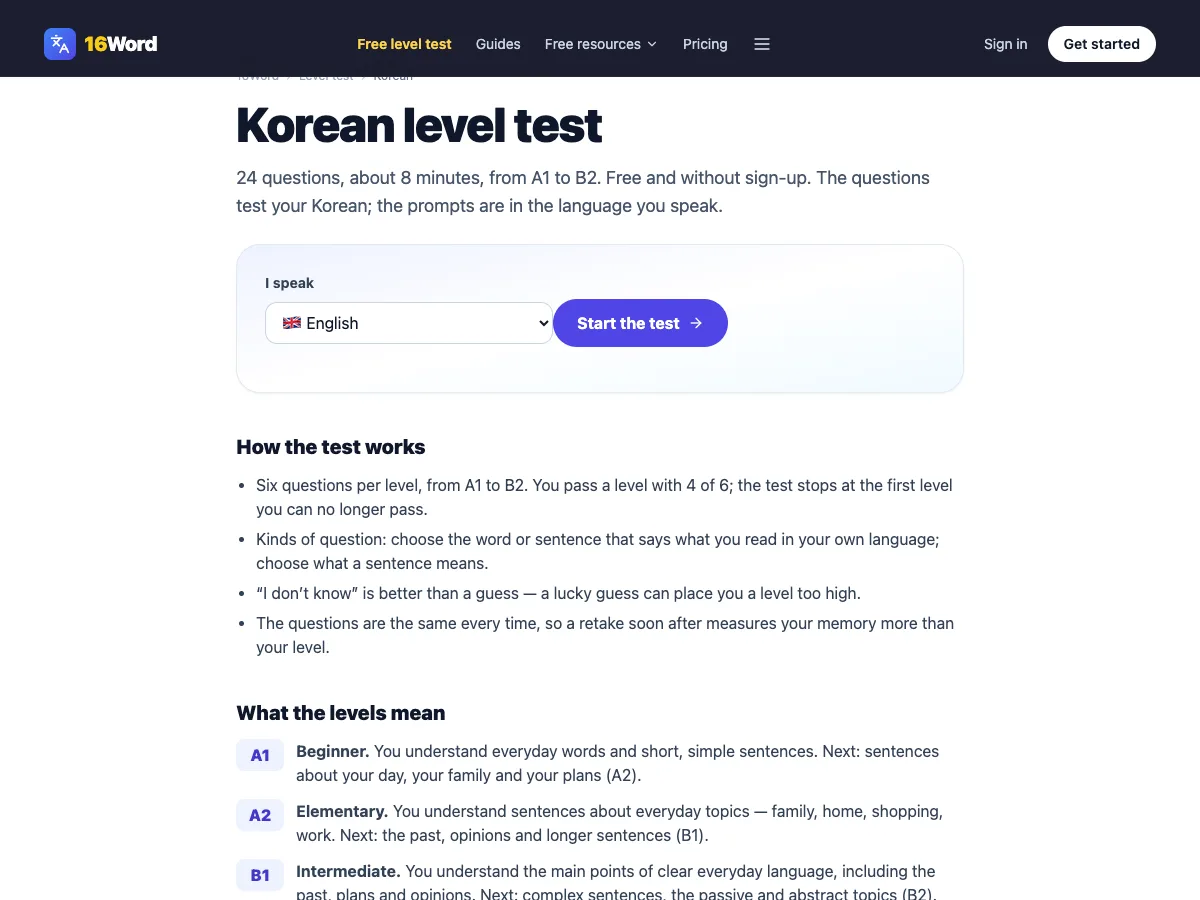
- Take a free Korean level test to see your starting point.
- Check what level your university, employer or visa requires.
- Decide between paper and computer where you have the choice, and practise that way.
- Check dates and places on the official website.
Korean, 16 words at a time
Tell us your level and goal, and your path shows you what to do next.
16Word's paths stop at B2 on the CEFR scale and do not follow TOPIK levels. They give you words and recall; official material shows you the exam.
See also language exams for studying abroad and language exams for work and visas.
Keep exploring
Every exam below has its own preparation page on 16Word.
The other language exams
- Sproochentest (Luxembourgish)
- Inburgeringsexamen (Dutch)
- Staatsexamen NT2 (Dutch)
- TOEFL iBT (English)
- IELTS (English)
- Cambridge English (English)
- PTE Academic (English)
- DELF (French)
- DALF (French)
- TCF (French)
- TEF (French)
- Goethe-Zertifikat (German)
- TestDaF (German)
- telc Deutsch (German)
- DELE (Spanish)
- CILS (Italian)
- CAPLE (Portuguese)
- HSK (Chinese)
- JLPT (Japanese)
- YKI (Finnish)
- Ellinomatheia (Greek)
- Certyfikat polski (Polish)
More guides on language exams
- IELTS explained: the 0–9 band, test options and how to prepare
- TOEFL iBT explained: the 1–6 score scale and how to prepare
- Cambridge English exams: from A2 Key to C2 Proficiency
- PTE Academic explained: the 10–90 score and how to prepare
- IELTS, TOEFL, PTE or Cambridge: which English exam should you take?
- DELF explained: levels A1 to B2, pass mark and preparation
- DALF C1 and C2: what the advanced French diplomas require
- The TCF French test: five skills, levels and validity
- The TEF French test: the 0–699 score, uses and preparation
- DELF, TCF or TEF: which French exam do you need?
- Goethe-Zertifikat explained: levels A1 to C2 and how to prepare
- TestDaF explained: TDN 3 to 5 and studying in Germany
- telc Deutsch explained: exams, skills and how to prepare
- Goethe, TestDaF or telc: which German exam should you take?
- The DELE Spanish diplomas: levels and how to get ready
- CILS Italian certificate: levels, skills and how to pass
- CAPLE Portuguese exams: levels A1 to C2 and who needs them
- HSK explained: levels 1 to 9 and the five skills tested
- How to prepare for the JLPT: a plan from N5 to N1
- The YKI Finnish test: levels 1 to 6 and how to prepare
- How to prepare for the Greek Certificate of Attainment
- How to pass the Polish language certificate exam
- Staatsexamen NT2: how scoring works and how to prepare
- Language exams for studying abroad: which certificate to take
- Language exams for work and visas: which certificate you need
- Language exams for citizenship: which certificates are used
- Do language certificates expire? Validity of the main exams
- Language exams you can take at home: what to check first
- Free official sample papers for 17 language exams
Related guides and free level tests
- The Dutch inburgering exam in 2026: routes, parts, fees and FAQ
- Sproochentest speaking (A2): topics, picture description and how to prepare
- Sproochentest listening (B1): the three recordings and how to practise
- A 60-day Sproochentest preparation plan, week by week
- Luxembourgish levels A1 to B2: what each CEFR level means in practice
- What level of Luxembourgish do you need for citizenship?
- The inburgering reading exam (A2 and B1): format, question types and tips
- The inburgering listening exam (A2 and B1): what to expect and how to train
- The inburgering writing exam (A2 and B1): tasks, model messages and mistakes
- The inburgering speaking exam (A2 and B1): format and model answers
- The KNM exam (Knowledge of Dutch Society): format, themes and how to prepare
- Staatsexamen NT2: programme I (B1) or programme II (B2)?
- A2 or B1 Dutch: which level do you need for inburgering, nationality or study?
- Inburgering exemptions and dispensation: when you take fewer or no exams
- What inburgering costs: exam fees, free attempts and the DUO loan
- The 3-year inburgering deadline: letters, fines and extra time
- How to register for the inburgering exams and the Staatsexamen NT2
- Dutch citizenship: the A2 language requirement and the naturalisation test
- Belgian nationality: the A2 language requirement and the Flemish Dutch test
- Inburgering in Flanders: the integration pathway and A2 Dutch
- The three inburgering routes: B1, education and Z route explained
- A 12-week plan to prepare for the inburgering exams
- Spanish nationality: the DELE A2 and CCSE requirement explained
- Italian citizenship: the B1 Italian language requirement
- Portuguese nationality: the A2 requirement and the CIPLE exam
- Finnish citizenship: the language requirement and the YKI test
- The Czech A2 exam for permanent residence: format, points and fee
- JLPT levels N5 to N1: sections, times and pass marks
- Polish citizenship: the B1 Polish certificate and how to get it
TOPIK: frequently asked questions
What levels does TOPIK report?
Levels 1 to 6.
Which skills does TOPIK cover?
Listening, reading, writing and speaking, according to the official information.
How long is a TOPIK result valid?
Two years.
What is TOPIK used for?
Often for study, work, and visas and residence.
Should I learn Hangul first?
Yes. Everything else depends on it, and it takes far less time than most people fear.
Was this guide useful?
Official sources
Keep going
- /certifications/topik
- TOPIK levels explained: TOPIK I and II, scores, IBT and speaking
- The YKI Finnish test: levels 1 to 6 and how to prepare
- How to prepare for the Greek Certificate of Attainment
- How to pass the Polish language certificate exam
- Staatsexamen NT2: how scoring works and how to prepare
- Language exams for studying abroad: which certificate to take
- Language exams for work and visas: which certificate you need
- Language exams for citizenship: which certificates are used
- All guides