A short history of French: from Latin to the Académie française
French is Latin that changed in the mouths of people in northern Gaul for fifteen centuries. Five moments turned it into the language you are learning — and they explain its silent letters, its spelling and why English looks so familiar to a French reader. Dates are from Britannica and the institutions concerned.
Updated · 4 min read
From Latin to Romance
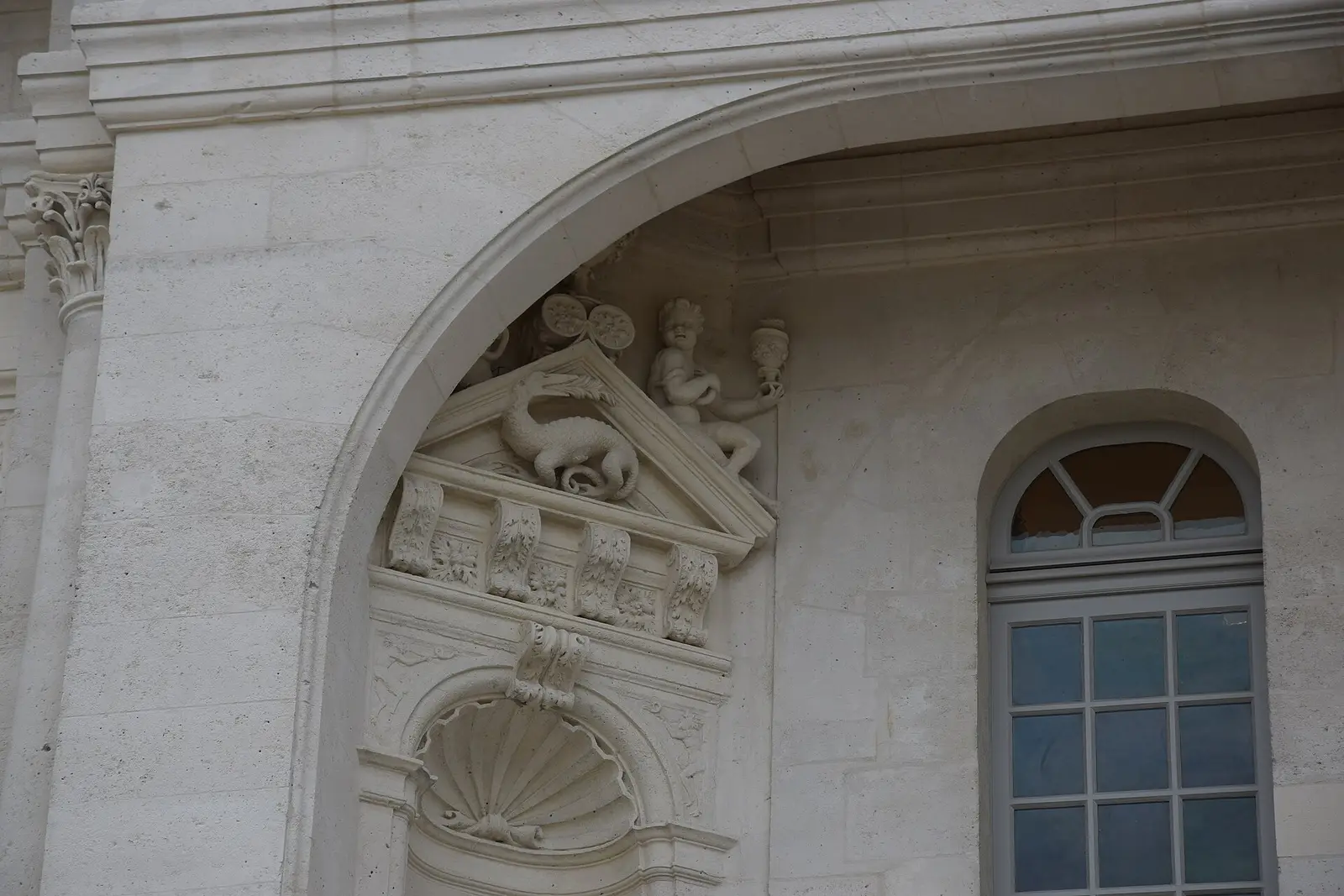
French is a Romance language that grew out of the Vulgar Latin spoken in northern and central Gaul (Britannica). It changed more, and faster, than its sisters: Latin secūrum became Spanish seguro but French sûr; Latin vōcem became Spanish voz but French voix, pronounced “vwa”. That is the first reason French spelling and sound drift apart.
842: the first French text
The first document apparently written in French is the Strasbourg Oaths of 842, sworn by two of Charlemagne’s grandsons. The next is a short poem on Saint Eulalia, dated 880–882, and in the 12th century came the Chanson de Roland, the great epic of Old French (Britannica).
Paris wins: Francien and the langues d’oïl
Medieval northern France spoke many dialects, the langues d’oïl — named after oïl, the old word for oui — while the south spoke Occitan, the langue d’oc. In the 12th–13th centuries the dialect of Paris and the Île-de-France, Francien, became dominant thanks to the prestige of the capital. Before that, Norman had more prestige; it travelled to England as Anglo-Norman and was used there until the 14th century — which is why so much French entered English (A short history of English). Today French reaches far beyond these regions — see Where is French spoken?.
1539: the edict of Villers-Cotterêts
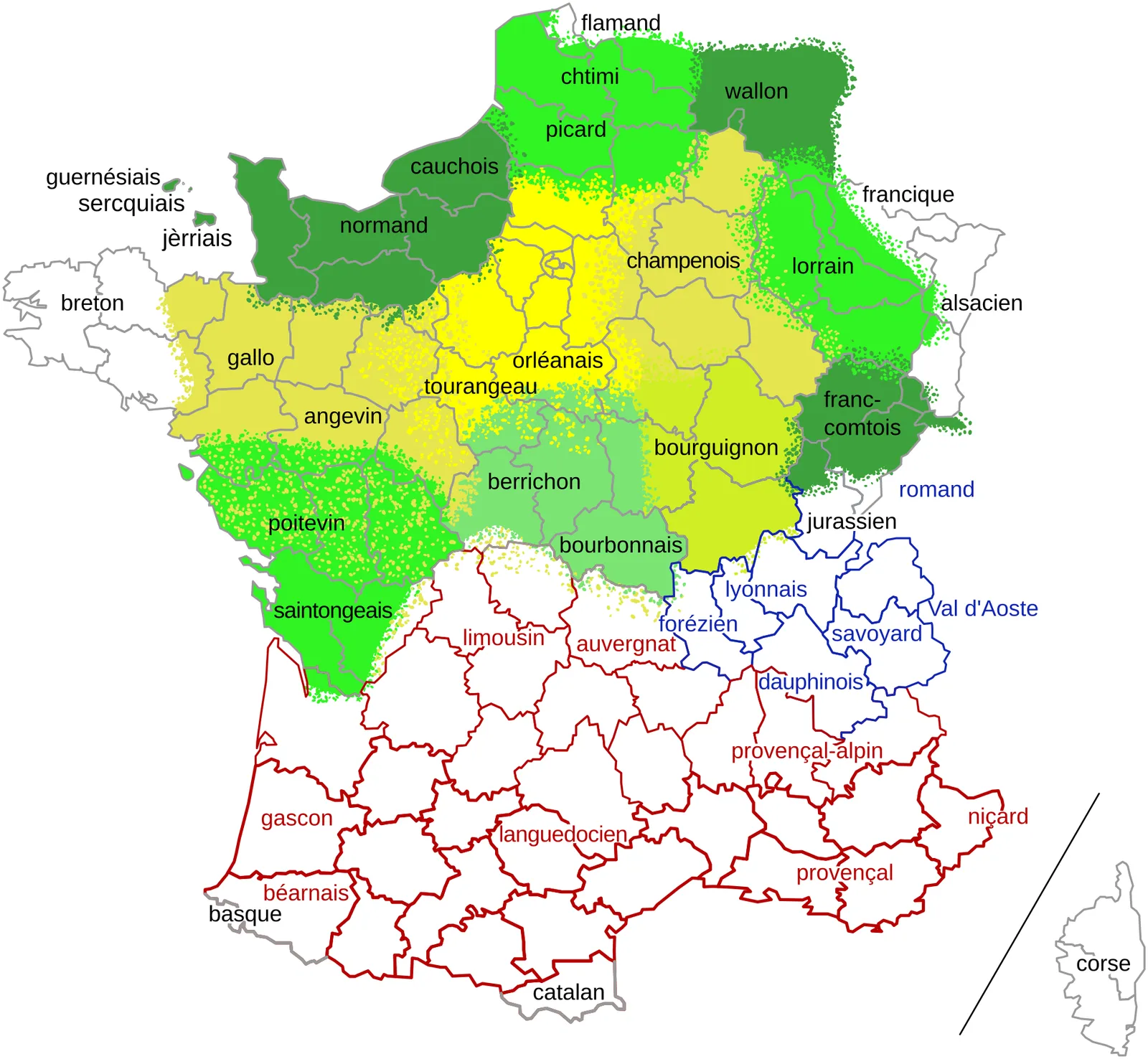
In 1539 the Edict of Villers-Cotterêts made Francien the only official language, against Latin and the other dialects. From then on standard French slowly replaced local varieties, though it reached everyday speech in every region only in the 19th century (Britannica). The château where the edict takes its name now houses the Cité internationale de la langue française, a cultural venue devoted to French and francophone cultures. French is still a language of law elsewhere, too: Luxembourg writes its laws in French (the languages of Luxembourg).
1635: the Académie française
Cardinal Richelieu founded the Académie française in 1635; its first Dictionnaire appeared in 1694, and the four volumes of the ninth edition came out in 1992, 2000, 2011 and 2024 (Académie française). In the 17th and 18th centuries grammar and vocabulary were standardised to an unprecedented degree, and dialect features once admired were ridiculed (Britannica).
| Date | What happened |
|---|---|
| 842 | Strasbourg Oaths, the first text apparently in French |
| 12th–13th c. | Francien, the speech of Paris, becomes dominant |
| 1539 | Edict of Villers-Cotterêts: French the only official language |
| 1635 / 1694 | Académie française founded / its first Dictionnaire |
| 19th c. | Standard French reaches popular speech in all regions |
| 1992–2024 | The Académie’s ninth edition, in four volumes |
Modern French: a written language and a spoken one
Spelling kept the memory of older pronunciations: the plural -s is still written but generally silent, and many verb forms sound alike (Britannica). Tenses shifted too. The passé simple is now the least used tense of the indicative — almost absent from speech and kept mainly for written narrative, while conversation uses the passé composé (OQLF). Our guide French tenses explained shows what that means for learners.
What this history means for you: learn every word with its sound, because spelling tells you its past more than its present — and start at your level with the free French level test. And if you know English, use it: words like parliament, liberty and dinner came from French (Britannica).
Learn French words with their sound
16Word gives you 16 words a day with audio, active recall, spaced repetition and a short Blocks game between answers — about five minutes, free to start.
Keep learning
- Why learn French? 7 reasons
- Where is French spoken? — a world map and the laws
- French grammar basics · French tenses explained
- Free French level test · Learn French with 16Word · Level tests in 36 languages · All guides · Plans
Frequently asked questions
Where does French come from?
From the Vulgar Latin spoken in northern and central Gaul. It is a Romance language, like Spanish, Portuguese and Italian.
What is the oldest text in French?
The Strasbourg Oaths of 842, sworn by two grandsons of Charlemagne, are the first document apparently written in French.
What was the edict of Villers-Cotterêts?
A 1539 legal reform that made Francien, the French of Paris, the only official language, against Latin and the other dialects.
When was the Académie française founded?
In 1635, by Cardinal Richelieu. Its first dictionary appeared in 1694; the ninth edition was completed in four volumes between 1992 and 2024.
Why is French spelling so far from its pronunciation?
French changed faster than the other Romance languages, and spelling kept older forms: the plural -s, for example, is still written but generally not pronounced.
Was this guide useful?
Official sources
Keep going
- Free French level test — A1 to B2, no sign-up
- Learn French 16 words a day
- Where is French spoken? Countries, speakers and official status
- A short history of Chinese: from oracle bones to pinyin
- Where is Chinese spoken? Mandarin, the dialect groups and a map
- A short history of Japanese: from the Kojiki to kana and kanji
- Where is Japanese spoken? Dialects, the Ryukyuan languages and a map
- Endangered languages: why they disappear, how they come back, and what 16Word is building
- Is Latin a dead language? Where Latin lives today — and how to learn it
- Luxembourgish: how a small language keeps growing
- All guides