Kiermes, priests and Prussians: the village life behind Luxembourgish sayings
Many Luxembourgish sayings are snapshots of an older country: the village fair, the priest and his sexton, the farmer’s cows, the church bells — and the Prussian soldiers in the fortress. Here is the world behind them, saying by saying.
Updated · 4 min read
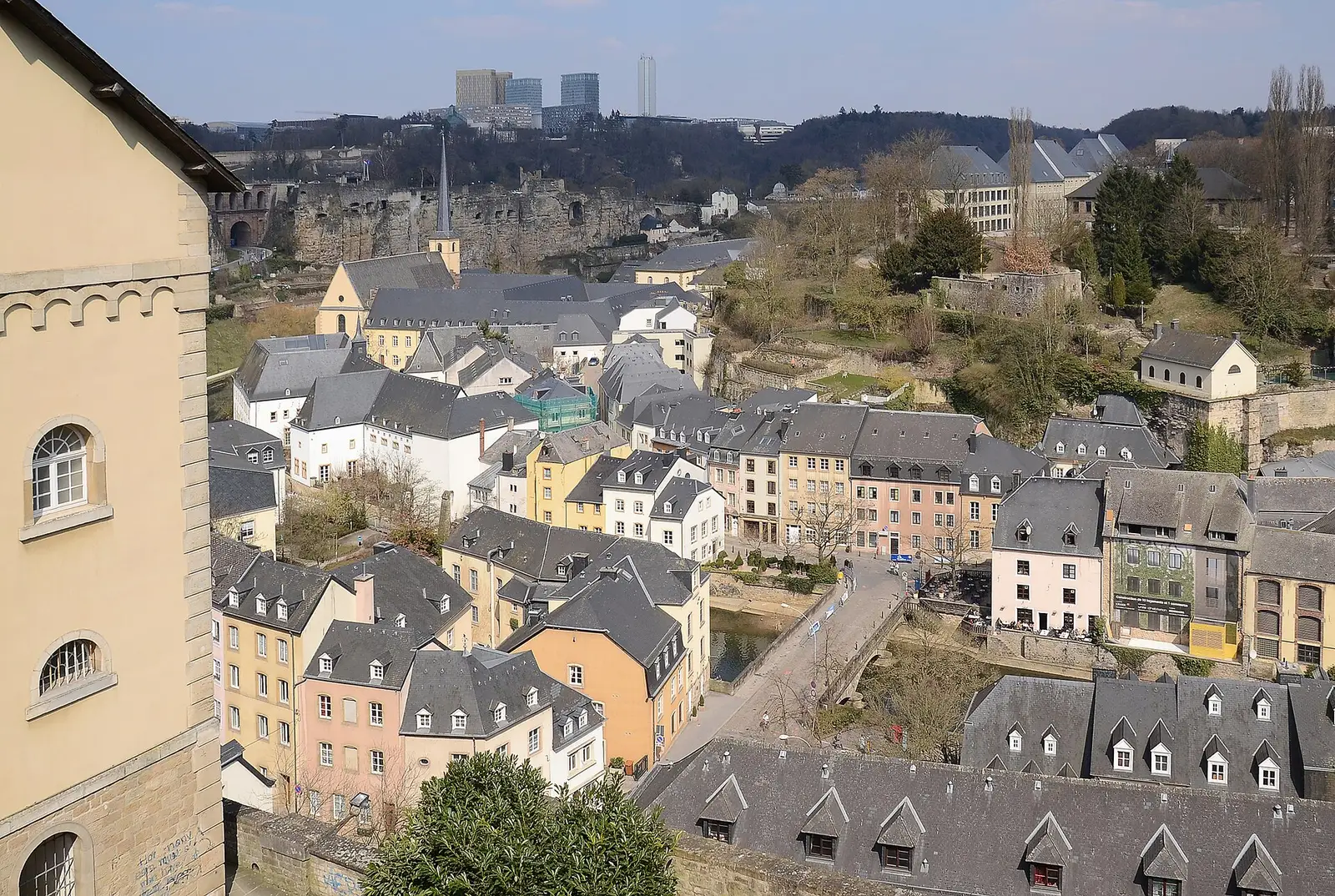
For most of its history Luxembourg was a country of villages, and the language kept that life in its proverbs. The general history is in where Luxembourgish proverbs come from; this page looks at the people and places the sayings remember. Farm and village words have their own vocabulary page: farming and agriculture.
The farmer
Wat de Bauer net kennt, dat frësst en net.
Literally: What the farmer does not know, he does not eat.
Meaning: People reject what is unfamiliar to them. The farmer as the stubborn conservative — he will not eat what he does not know.
Deen dommste Bauer huet déi déckste Gromperen.
Literally: The dumbest farmer has the biggest potatoes.
Meaning: Even foolish people can be lucky. The farmer as the lucky fool — potatoes (Gromperen) were the staple crop.
Bei deenen enge kaalwen d'Uessen um Späicher, bei deenen aneren d'Kéi emol net am Stall.
Literally: For some the oxen calve in the attic, for others the cows do not even calve in the barn.
Meaning: Some people always have luck, others always have bad luck. With some, the oxen calve in the attic; with others not even the cows in the stable — luck and bad luck in farmyard terms.
Et gëtt een al ewéi eng Kou an et léiert een all Dag derzou.
Literally: One grows as old as a cow and learns something more every day.
Meaning: You can keep learning things all your life. An old cow still learns something every day. The verb is léieren.
The Kiermes
The Kiermes is the parish fair, held on the patron saint’s day: a Mass, a big meal, music, dancing and stalls. It was the high point of the village year, and the language remembers it — see also Luxembourg’s traditions and their words.
Et ass net all Dag Kiermes!
Literally: It is not a village fair every day!
Meaning: Life is not made up only of good moments. It isn’t a fair every day: life is not only feasts.
Wien op d'Kiermes geet, deem seng Plaz vergeet!
Literally: Whoever goes to the fair loses his place!
Meaning: Whoever leaves their seat must expect someone else to take it. Whoever goes to the fair loses their seat — get up and someone else sits down.
Et muss ee mat deene Meedercher danzen, déi do sinn!
Literally: One has to dance with the girls who are there!
Meaning: You have to be satisfied with what you have. You have to dance with the girls who are there: make do with what you have.
Et kann een net op zwou Hochzäiten danzen.
Literally: One cannot dance at two weddings.
Meaning: You cannot do several things at the same time. You can’t dance at two weddings.
The church
Wann et op de Paschtouer reent, dann drëpst et op de Koschter.
Literally: When it rains on the priest, it drips on the sexton.
Meaning: When important people gain advantages, the ordinary people around them profit a little too. When it rains on the priest, it drips on the sexton (Koschter) — the people around important people get a little of their luck.
Et muss een déi zwou Klacken héieren!
Literally: One must hear the two bells!
Meaning: You have to listen to both sides of an argument. You have to hear both bells: listen to both sides.
Sief net méi helleg ewéi de Poopst!
Literally: Do not be holier than the Pope!
Meaning: Do not try to be perfect. More holy than the Pope: don’t try to be perfect.
Et ass kee Prophéit a sengem eegene Land.
Literally: There is no prophet in his own country.
Meaning: People are often recognised abroad but not in their homeland. No prophet in his own land — a biblical saying, as in English.
Der Däiwel ass net esou schwaarz, wéi e gemoolt gëtt!
Literally: The devil is not as black as he is painted!
Meaning: Things are often less bad in reality than you imagine. The devil isn’t as black as he is painted.
Wann een d'Häll gewinnt ass, fäert een der Däiwel net.
Literally: When one is used to hell, one does not fear the devil.
Meaning: Once you are used to the worst, nothing can frighten you. Used to hell, you no longer fear the devil.
The Prussians
After 1815 the fortress of Luxembourg became a fortress of the German Confederation and was garrisoned by Prussian troops until 1867, when the Treaty of London declared the country neutral and ordered the fortifications dismantled. For half a century Prussian soldiers were part of city life — and the language has a saying about them:
Esou séier schéissen d'Preisen net.
Literally: The Prussians do not shoot that fast.
Meaning: Nothing happens that quickly. The Prussians don’t shoot that fast: nothing happens that quickly. German has the same saying (so schnell schießen die Preußen nicht); in Luxembourg, with its Prussian garrison, the picture was close to home.
The Prussians also appear in Michel Lentz’s railway song of 1859, which invites visitors “from France, Belgium, Prussia” — see where the national motto comes from. The remains of the fortress are a UNESCO World Heritage site, and the museum in Fort Thüngen tells its story.
Kleeschen and the believers
Du gleefs och nach un de Kleeschen!
Literally: You still believe in Saint Nicholas too!
Meaning: You are naive. You still believe in St Nicholas: you are naive. More about the Kleeschen in the traditions guide.
Hie féiert e Liewen ewéi Gott am Frankräich.
Literally: He leads a life like God in France.
Meaning: He leads a very pleasant life. Living like God in France: a very comfortable life. The same saying exists in German.
Keeping your own doorstep clean
Kier emol fir d'éischt virun denger Dier!
Literally: First sweep in front of your own door!
Meaning: Do not criticise others; you are not perfect either. Sweep in front of your own door first.
Maach ewéi d'Leit, da geet et der ewéi de Leit!
Literally: Do as the people do, then it goes for you as for the people!
Meaning: If you fit in with others, you will not have problems. Do as the people do, and it will go for you as it goes for the people.
Si hunn de Bock zum Gäertner gemaach.
Literally: They made the billy goat the gardener.
Meaning: They gave the responsibility to someone likely to do more harm than good. Making the billy goat the gardener — a farmyard warning.
Words for village life
The verbs in these sayings are everyday ones: danzen, héieren (to hear), gleewen (to believe), liewen (to live), goen and maachen. Place and home words are on home and household and travel and tourism; for a village visit, see day trips from Luxembourg City.
More sayings: food and drink, animals, time and luck, and the comparison with English and French.
Reading a saying is one thing; using it at the right moment is another. For that, practise with a person: on Edluxio you can book 1-to-1 online lessons with independent teachers, native speakers among them, and try your new sayings in a real conversation. Book a trial lesson; if your first lesson isn’t right for you, you get a full refund.
Learn 196 sayings with native audio
Every saying on this page is in 16Word’s Proverbs & Idioms track — the meaning in your language, the saying in Luxembourgish, the native recording.
Keep learning
- 16 Luxembourgish proverbs everyone knows
- Where Luxembourgish proverbs come from
- 30 everyday Luxembourgish idioms
- Animal idioms and proverbs
- Idioms about the body
- Food and drink sayings
- Money and work in proverbs
- Love, friends and family in sayings
- Sayings about time, patience and luck
- The same proverb in English, French and Luxembourgish
- Tongue twisters and sound drills
- Where the national motto comes from
- Luxembourg’s traditions and their words
- How to say hello · thank you · how are you
- Cheers in Luxembourgish · good luck
- How to learn Luxembourgish online
- Is Luxembourgish hard to learn?
- Every Luxembourgish verb table, with audio
- All free Luxembourgish resources
- Free Luxembourgish level test
Frequently asked questions
What does “Esou séier schéissen d’Preisen net” mean?
The Prussians don’t shoot that fast: there is no rush, things won’t happen that quickly. Luxembourg’s fortress had a Prussian garrison from 1815 to 1867.
What is a Kiermes?
A parish fair held on the patron saint’s day, with a Mass, a family meal, music and stalls. Many villages still hold theirs, often in autumn.
What does “Et ass net all Dag Kiermes” mean?
It isn’t a fair every day: life is not made only of good moments.
What does “Et muss een déi zwou Klacken héieren” mean?
You have to hear both bells: listen to both sides before judging.
Why are there so many farm sayings in Luxembourgish?
Most Luxembourgers lived in villages and farmed until the industrial age; the proverbs kept their world.
Was this guide useful?
Official sources
Keep going
- Learn Luxembourgish with native LOD audio
- Proverbs & Idioms — up to 196 sayings per language
- Sproochentest : déroulement, niveau requis et questions fréquentes
- The Dutch inburgering exam and Belgian nationality: levels, parts, fees and FAQ
- Luxembourgish proverbs: 16 sayings, what they mean, with native audio
- Working for the Luxembourg government: nationality, the three languages and the 2026 rules
- Working for the Dutch government: nationality, the Dutch level you need and screening
- Working for the Belgian government: nationality, language roles and certificates
- Endangered languages: why they disappear, how they come back, and what 16Word is building
- Is Latin a dead language? Where Latin lives today — and how to learn it
- Luxembourgish: how a small language keeps growing
- How to learn Luxembourgish online: free and paid options compared
- Luxembourgish personal pronouns: ech, du, hien, hatt, si, mir, dir — with audio
- How to conjugate Luxembourgish verbs in the present tense
- Luxembourgish irregular verbs: sinn, hunn, goen, kommen and the modals
- Luxembourgish word order: verb second, verb last and separable verbs
- The Luxembourgish n-rule (Eifeler Regel) explained with examples
- Negation in Luxembourgish: net, keen, keng, näischt, ni and dach
- How to ask questions in Luxembourgish: wat, wien, wéini, wou, wéi, firwat
- The Luxembourgish past tense: perfect with hunn or sinn, and war and hat
- 100 everyday Luxembourgish verbs with meanings, present and past
- 32 Luxembourgish greetings and everyday phrases, with audio
- Sproochentest speaking (A2): topics, picture description and how to prepare
- Sproochentest, épreuve orale (A2) : thèmes, description d'image et préparation
- Sproochentest listening (B1): the three recordings and how to practise
- Sproochentest, compréhension orale (B1) : les trois enregistrements et comment s'entraîner
- A 60-day Sproochentest preparation plan, week by week
- Plan de préparation au Sproochentest en 60 jours, semaine par semaine
- Luxembourgish levels A1 to B2: what each CEFR level means in practice
- How to pronounce Luxembourgish: vowels, diphthongs and consonants with audio
- Luxembourgish spelling: capitals, long vowels, ë é ä, d' and the n-rule
- Luxembourgish at the doctor and the pharmacy: words and sentences with audio
- Shopping and eating out in Luxembourgish: ordering, prices and paying
- Apprendre le luxembourgeois quand on parle français : le guide du débutant
- Aprender luxemburguês: guia para quem fala português
- Is Luxembourgish hard to learn? An honest guide for beginners
- Le luxembourgeois est-il difficile à apprendre ? Le guide honnête pour débutants
- Is Luxembourgish a language or a German dialect? History, law and the differences
- Le luxembourgeois est-il une langue ou un dialecte allemand ? Histoire, loi et différences
- What language is spoken in Luxembourg? Luxembourgish, French and German explained
- Quelle langue parle-t-on au Luxembourg ? Luxembourgeois, français et allemand expliqués
- Which language should you learn first when moving to Luxembourg?
- Quelle langue apprendre en premier en s'installant au Luxembourg ?
- Luxembourgish vs Dutch: how close are they?
- Luxembourgeois et néerlandais : à quel point sont-ils proches ?
- Best apps to learn Luxembourgish (and is it on Duolingo?)
- Les meilleures applications pour apprendre le luxembourgeois (et Duolingo ?)
- 12 common mistakes learners make in Luxembourgish (and how to fix them)
- 12 erreurs courantes en luxembourgeois (et comment les corriger)
- Free ways to learn Luxembourgish — and the 200-hour language leave
- Apprendre le luxembourgeois gratuitement — et le congé linguistique de 200 heures
- Is Luxembourgish worth learning? Work, citizenship and everyday life
- Faut-il apprendre le luxembourgeois ? Travail, nationalité et vie quotidienne
- What level of Luxembourgish do you need for citizenship?
- Where Luxembourgish proverbs come from: a short history of the country’s sayings
- Luxembourgish idioms: 30 everyday expressions and what they really mean
- Luxembourgish animal idioms and proverbs: cats, dogs, donkeys and wolves
- Head, nose and heart: Luxembourgish idioms about the body
- Luxembourgish food and drink sayings: hunger, soup, cherries and potatoes
- Money and work in Luxembourgish proverbs: what Luxembourgers say about earning and spending
- Love, friends and family in Luxembourgish sayings
- Patience, luck and timing: Luxembourgish sayings about time
- Luxembourgish tongue twisters: 15 real sentences to train the hardest sounds
- The same proverb in English, French and Luxembourgish: 27 sayings compared
- 20 Luxembourgish expressions every newcomer hears (and what they mean)
- Ons Heemecht: Luxembourg’s national anthem — words, translation and history
- “Mir wëlle bleiwe wat mir sinn”: where Luxembourg’s national motto comes from
- Luxembourg’s traditions and their words: from Liichtmëssdag to Kleeschen
- The first writers in Luxembourgish: Meyer, Lentz, Dicks and Rodange
- Luxembourg Airport to the city centre: tram, bus and taxi (free public transport)
- Free public transport in Luxembourg: how it works — and what is not free
- Entering Luxembourg: Schengen, passports, the EES and ETIAS (2026)
- Luxembourgish for public transport: bus, train and travel phrases with audio
- Luxembourg to Paris by train: TGV in about 2h10, fares from €25
- Luxembourg to Brussels and Belgium: hourly trains, €21.30, no booking needed
- Luxembourg to Germany by train: Koblenz, Cologne, Frankfurt, Munich and Berlin
- Luxembourg to Trier and the Moselle: trains in 50 minutes, buses from €3
- Luxembourg to Amsterdam and the Netherlands by train: three routes compared
- Luxembourg to Metz, Nancy and Strasbourg: trains, buses and free border stops
- Luxembourg to Lyon, Marseille and the south of France by direct TGV
- Luxembourg to Basel, Zurich and Switzerland by train: three routes
- Luxembourg to London by train or plane: Eurostar via Brussels or Paris
- Luxembourg to Portugal: flights, trains over two days, and coaches
- Luxembourg to Italy by train: Milan and Turin in a day, via Paris or Zurich
- Luxembourg to Barcelona, Madrid and Spain: by train in a day, or fly
- Airports near Luxembourg: Findel, Frankfurt, Brussels and Charleroi compared
- Commuting to Luxembourg from France, Belgium or Germany: trains, buses and passes
- Driving in and to Luxembourg: speed limits, rules, fuel and tolls next door
- Day trips from Luxembourg City by free train and bus
- Luxembourg to Vienna, Salzburg and Austria by train — in a day or overnight
- Luxembourg to Prague, Warsaw and Kraków by train in a day
- Night trains within reach of Luxembourg: Nightjet from Koblenz, Paris to Nice
- Luxembourg to Copenhagen and Scandinavia by train (or plane)