The same proverb in English, French and Luxembourgish: 27 sayings compared
Luxembourg lives between French and German, and its sayings show it. Here are 27 proverbs and idioms in English, French and Luxembourgish — eighteen that say the same thing in the same picture, and nine that choose a different animal, object or person.
Updated · 6 min read
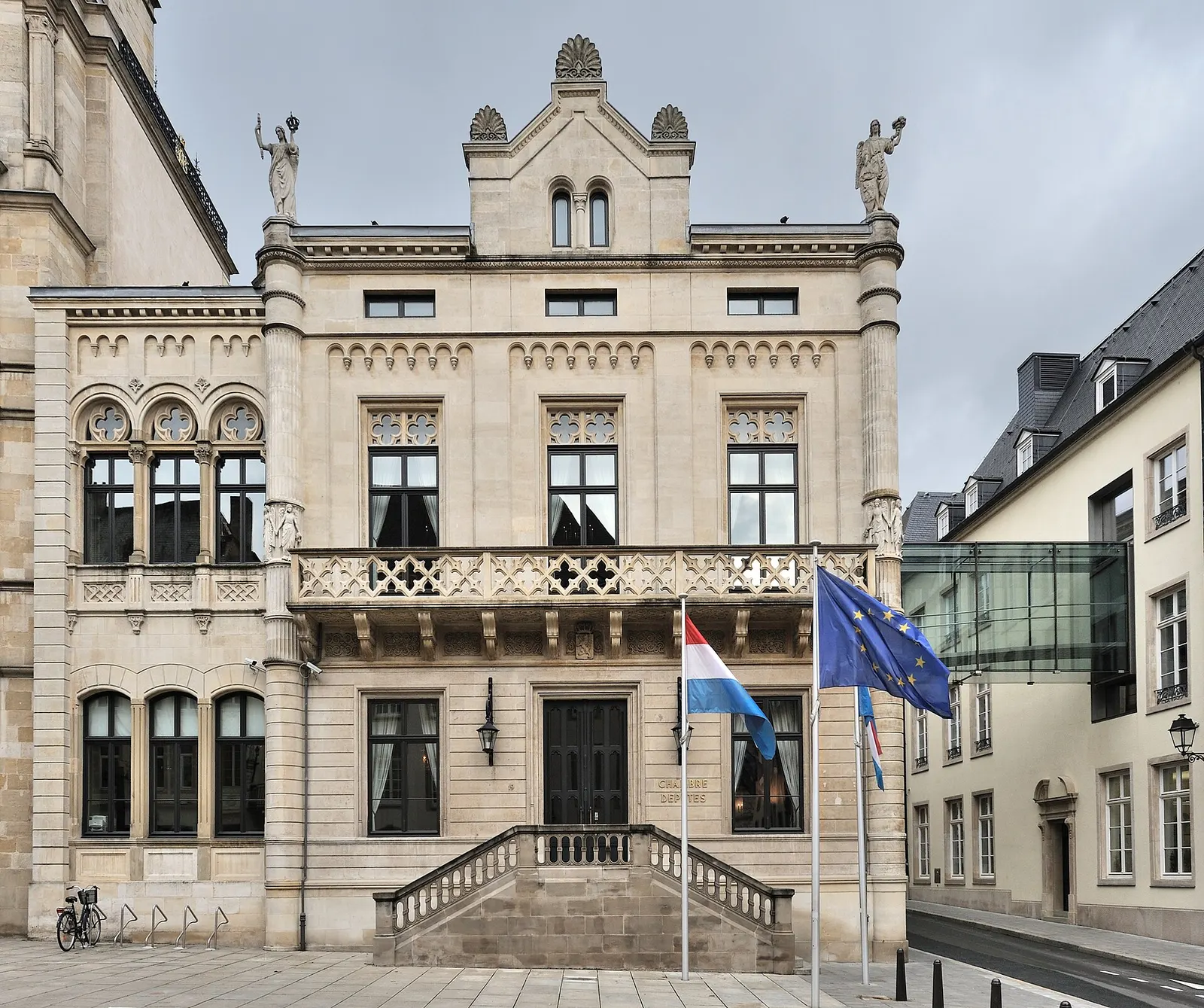
If you already speak English or French, proverbs are a shortcut into Luxembourgish: you know the idea, so you only have to learn the words. Many of these sayings are old and European, which is why they travel so well — the story of how they reached Luxembourgish is in where Luxembourgish proverbs come from. French speakers will find more help in apprendre le luxembourgeois quand on parle français and on our French pages for phrases and vocabulary.
Eighteen that match
| Luxembourgish | English | French |
|---|---|---|
| Et ass net alles Gold, wat blénkt. | All that glitters is not gold | Tout ce qui brille n’est pas or |
| Wann d'Kaz fort ass, sinn d'Mais Meeschter. | When the cat’s away, the mice will play | Quand le chat n’est pas là, les souris dansent |
| Honn, déi billen, bäissen net. | Barking dogs seldom bite | Chien qui aboie ne mord pas |
| D'Léift mécht blann. | Love is blind | L’amour rend aveugle |
| Et kann ee keng Omlett maachen, ouni Eeër ze briechen. | You can’t make an omelette without breaking eggs | On ne fait pas d’omelette sans casser des œufs |
| Et ass kee Prophéit a sengem eegene Land. | No man is a prophet in his own land | Nul n’est prophète en son pays |
| Du kanns den Iesel bei d'Waasser féieren, mee saufe muss e selwer! | You can lead a horse to water, but you can’t make it drink | On ne peut pas faire boire un âne qui n’a pas soif |
| Ech sinn am siwenten Himmel! | To be in seventh heaven | Être au septième ciel |
| Elo ass d'Äis gebrach! | To break the ice | Briser la glace |
| Du hëls mer d'Wierder aus dem Mond! | You took the words out of my mouth | Tu m’as ôté les mots de la bouche |
| Mir brauchen d'Rad net nei ze erfannen. | To reinvent the wheel | Réinventer la roue |
| Hie fillt sech ewéi e Fësch am Waasser. | Like a fish in water | Comme un poisson dans l’eau |
| Si hunn Ueleg op d'Feier geschott. | To add fuel to the fire | Jeter de l’huile sur le feu |
| Ech sëtzen tëschent zwee Still. | To fall between two stools | Être assis entre deux chaises |
| Ech hunn de Beweis schwaarz op wäiss. | In black and white | Noir sur blanc |
| Sief net méi helleg ewéi de Poopst! | More Catholic than the Pope | Plus catholique que le pape |
| Loosse mer Holz upaken! | Touch wood | Toucher du bois |
| Esou ass d'Liewen! | That’s life | C’est la vie |
Listen to a few of them — the recordings are from the official dictionary:
Et ass net alles Gold, wat blénkt.
Literally: It is not all gold that glitters.
Meaning: Not everything that looks good is good.
Wann d'Kaz fort ass, sinn d'Mais Meeschter.
Literally: When the cat is away, the mice are masters.
Meaning: When the person in charge is away, everyone does as they please.
Et kann ee keng Omlett maachen, ouni Eeër ze briechen.
Literally: One cannot make an omelette without breaking eggs.
Meaning: It is hard to achieve something without giving something up for it.
Sief net méi helleg ewéi de Poopst!
Literally: Do not be holier than the Pope!
Meaning: Do not try to be perfect. Luxembourgish says helleg (holy), French and English say Catholic.
Loosse mer Holz upaken!
Literally: Let us touch wood!
Meaning: Hopefully nothing goes wrong.
Nine that choose a different picture
| Luxembourgish | English | French | What changes |
|---|---|---|---|
| Ech hunn e Fräsch am Hals. | A frog in the throat | Un chat dans la gorge | English and Luxembourgish have a frog; French has a cat. |
| Et reent al Fraen. | It’s raining cats and dogs | Il pleut des cordes | Luxembourgish has old women, French ropes, English cats and dogs. |
| Mäi Brudder ass dat Schwaarzt Schof an der Famill. | The black sheep | La brebis galeuse | French prefers a mangy ewe to a black sheep. |
| Du spaans de Won virun d'Päerd. | To put the cart before the horse | Mettre la charrue avant les bœufs | Horse and cart in English and Luxembourgish; plough and oxen in French. |
| Maach net aus all Méck en Elefant! | To make a mountain out of a molehill | Faire d’une mouche un éléphant | French and Luxembourgish share the fly and the elephant; English chose a molehill. |
| Verkaf de Pelz net, dees du hues de Bier geschoss! | Don’t count your chickens before they hatch | Il ne faut pas vendre la peau de l’ours avant de l’avoir tué | French and Luxembourgish sell the bear’s skin; English counts chickens. |
| Ech kafen dach keng Kaz am Sak! | To buy a pig in a poke | Acheter chat en poche | A cat in a sack in French and Luxembourgish, a pig in English. |
| Dat päifen d'Spatze vun den Diech. | It’s an open secret | C’est un secret de Polichinelle | Luxembourgish sparrows whistle it from the roofs; French blames the puppet Punch. |
| Mir fält e Stee vum Häerz. | A weight off my mind | Un poids en moins | Luxembourgish drops a stone from the heart. |
Ech hunn e Fräsch am Hals.
Literally: I have a frog in my throat.
Meaning: I have to clear my throat.
Et reent al Fraen.
Literally: It is raining old women.
Meaning: It is raining very hard.
Verkaf de Pelz net, dees du hues de Bier geschoss!
Literally: Do not sell the fur before you have shot the bear!
Meaning: Before you can profit from something, you first have to have it.
Dat päifen d'Spatze vun den Diech.
Literally: The sparrows whistle that from the roofs.
Meaning: Everybody knows that already.
Why so many match
Three reasons. Many proverbs come from Latin and the Bible (no prophet in his own land), which every European language translated. Others spread through trade and printing in the Middle Ages and the early modern period. And Luxembourgish has lived next to French and German for centuries — compare the three languages of Luxembourg and is Luxembourgish a language or a dialect?. When the picture differs, Luxembourgish usually sides with German (the fly and the elephant, the cat in the sack) — but not always.
How to learn them quickly
- Start from what you know: pick ten proverbs from the first table and learn only the Luxembourgish words.
- Learn the verbs inside: maachen, kafen, verkafen, briechen, drénken and danzen appear again and again.
- Watch the false friends: a Luxembourgish word can look French or German and still behave differently — see common mistakes learners make.
- Say them aloud: the recordings above are the model; the pronunciation guide explains the sounds.
More sayings by theme: animals, the body, food, money and work and time.
Reading a saying is one thing; using it at the right moment is another. For that, practise with a person: on Edluxio you can book 1-to-1 online lessons with independent teachers, native speakers among them, and try your new sayings in a real conversation. Book a trial lesson; if your first lesson isn’t right for you, you get a full refund.
Learn 196 Luxembourgish sayings
On 16Word you see the meaning in your own language — English, French or one of 30-odd others — and type the Luxembourgish saying, with the native recording after each answer.
Keep learning
- 16 Luxembourgish proverbs everyone knows
- Where Luxembourgish proverbs come from
- 30 everyday Luxembourgish idioms
- Animal idioms and proverbs
- Idioms about the body
- Food and drink sayings
- Money and work in proverbs
- Love, friends and family in sayings
- Sayings about time, patience and luck
- Kiermes, priests and Prussians: village life in sayings
- Tongue twisters and sound drills
- Apprendre le luxembourgeois (in French)
- Ressources gratuites en luxembourgeois
- How to say hello · thank you · how are you
- Cheers in Luxembourgish · good luck
- How to learn Luxembourgish online
- Is Luxembourgish hard to learn?
- Every Luxembourgish verb table, with audio
- All free Luxembourgish resources
- Free Luxembourgish level test
Frequently asked questions
Are Luxembourgish proverbs closer to French or to German?
In wording they are closer to German, since Luxembourgish is a West Germanic language. Many proverbs are shared by all three languages, and where the picture differs Luxembourgish usually follows German — but not always.
What is “a frog in the throat” in French and Luxembourgish?
French says “un chat dans la gorge” (a cat); Luxembourgish keeps the frog: “Ech hunn e Fräsch am Hals.”
How do you say “raining cats and dogs” in Luxembourgish and French?
Luxembourgish: Et reent al Fraen (it rains old women). French: Il pleut des cordes (it rains ropes).
How do you say “don’t count your chickens before they hatch” in Luxembourgish?
Verkaf de Pelz net, dees du hues de Bier geschoss! — don’t sell the fur before you have shot the bear, like the French “vendre la peau de l’ours”.
Is learning proverbs useful for French speakers learning Luxembourgish?
Yes — you already know the idea of most of them, so you only learn the words, and the sentences train word order and pronunciation at the same time.
Was this guide useful?
Official sources
Keep going
- Learn Luxembourgish with native LOD audio
- Proverbs & Idioms — up to 196 sayings per language
- Learn French 16 words a day
- Sproochentest : déroulement, niveau requis et questions fréquentes
- The Dutch inburgering exam and Belgian nationality: levels, parts, fees and FAQ
- Luxembourgish proverbs: 16 sayings, what they mean, with native audio
- Working for the Luxembourg government: nationality, the three languages and the 2026 rules
- Working for the Dutch government: nationality, the Dutch level you need and screening
- Working for the Belgian government: nationality, language roles and certificates
- Endangered languages: why they disappear, how they come back, and what 16Word is building
- Is Latin a dead language? Where Latin lives today — and how to learn it
- Luxembourgish: how a small language keeps growing
- How to learn Luxembourgish online: free and paid options compared
- Luxembourgish personal pronouns: ech, du, hien, hatt, si, mir, dir — with audio
- How to conjugate Luxembourgish verbs in the present tense
- Luxembourgish irregular verbs: sinn, hunn, goen, kommen and the modals
- Luxembourgish word order: verb second, verb last and separable verbs
- The Luxembourgish n-rule (Eifeler Regel) explained with examples
- Negation in Luxembourgish: net, keen, keng, näischt, ni and dach
- How to ask questions in Luxembourgish: wat, wien, wéini, wou, wéi, firwat
- The Luxembourgish past tense: perfect with hunn or sinn, and war and hat
- 100 everyday Luxembourgish verbs with meanings, present and past
- 32 Luxembourgish greetings and everyday phrases, with audio
- Sproochentest speaking (A2): topics, picture description and how to prepare
- Sproochentest, épreuve orale (A2) : thèmes, description d'image et préparation
- Sproochentest listening (B1): the three recordings and how to practise
- Sproochentest, compréhension orale (B1) : les trois enregistrements et comment s'entraîner
- A 60-day Sproochentest preparation plan, week by week
- Plan de préparation au Sproochentest en 60 jours, semaine par semaine
- Luxembourgish levels A1 to B2: what each CEFR level means in practice
- How to pronounce Luxembourgish: vowels, diphthongs and consonants with audio
- Luxembourgish spelling: capitals, long vowels, ë é ä, d' and the n-rule
- Luxembourgish at the doctor and the pharmacy: words and sentences with audio
- Shopping and eating out in Luxembourgish: ordering, prices and paying
- Apprendre le luxembourgeois quand on parle français : le guide du débutant
- Aprender luxemburguês: guia para quem fala português
- Is Luxembourgish hard to learn? An honest guide for beginners
- Le luxembourgeois est-il difficile à apprendre ? Le guide honnête pour débutants
- Is Luxembourgish a language or a German dialect? History, law and the differences
- Le luxembourgeois est-il une langue ou un dialecte allemand ? Histoire, loi et différences
- What language is spoken in Luxembourg? Luxembourgish, French and German explained
- Quelle langue parle-t-on au Luxembourg ? Luxembourgeois, français et allemand expliqués
- Which language should you learn first when moving to Luxembourg?
- Quelle langue apprendre en premier en s'installant au Luxembourg ?
- Luxembourgish vs Dutch: how close are they?
- Luxembourgeois et néerlandais : à quel point sont-ils proches ?
- Best apps to learn Luxembourgish (and is it on Duolingo?)
- Les meilleures applications pour apprendre le luxembourgeois (et Duolingo ?)
- 12 common mistakes learners make in Luxembourgish (and how to fix them)
- 12 erreurs courantes en luxembourgeois (et comment les corriger)
- Free ways to learn Luxembourgish — and the 200-hour language leave
- Apprendre le luxembourgeois gratuitement — et le congé linguistique de 200 heures
- Is Luxembourgish worth learning? Work, citizenship and everyday life
- Faut-il apprendre le luxembourgeois ? Travail, nationalité et vie quotidienne
- What level of Luxembourgish do you need for citizenship?
- Where Luxembourgish proverbs come from: a short history of the country’s sayings
- Luxembourgish idioms: 30 everyday expressions and what they really mean
- Luxembourgish animal idioms and proverbs: cats, dogs, donkeys and wolves
- Head, nose and heart: Luxembourgish idioms about the body
- Luxembourgish food and drink sayings: hunger, soup, cherries and potatoes
- Money and work in Luxembourgish proverbs: what Luxembourgers say about earning and spending
- Love, friends and family in Luxembourgish sayings
- Patience, luck and timing: Luxembourgish sayings about time
- Luxembourgish tongue twisters: 15 real sentences to train the hardest sounds
- 20 Luxembourgish expressions every newcomer hears (and what they mean)
- Ons Heemecht: Luxembourg’s national anthem — words, translation and history
- “Mir wëlle bleiwe wat mir sinn”: where Luxembourg’s national motto comes from
- Luxembourg’s traditions and their words: from Liichtmëssdag to Kleeschen
- The first writers in Luxembourgish: Meyer, Lentz, Dicks and Rodange
- Kiermes, priests and Prussians: the village life behind Luxembourgish sayings
- Luxembourg Airport to the city centre: tram, bus and taxi (free public transport)
- Free public transport in Luxembourg: how it works — and what is not free
- Entering Luxembourg: Schengen, passports, the EES and ETIAS (2026)
- Luxembourgish for public transport: bus, train and travel phrases with audio
- Luxembourg to Paris by train: TGV in about 2h10, fares from €25
- Luxembourg to Brussels and Belgium: hourly trains, €21.30, no booking needed
- Luxembourg to Germany by train: Koblenz, Cologne, Frankfurt, Munich and Berlin
- Luxembourg to Trier and the Moselle: trains in 50 minutes, buses from €3
- Luxembourg to Amsterdam and the Netherlands by train: three routes compared
- Luxembourg to Metz, Nancy and Strasbourg: trains, buses and free border stops
- Luxembourg to Lyon, Marseille and the south of France by direct TGV
- Luxembourg to Basel, Zurich and Switzerland by train: three routes
- Luxembourg to London by train or plane: Eurostar via Brussels or Paris
- Luxembourg to Portugal: flights, trains over two days, and coaches
- Luxembourg to Italy by train: Milan and Turin in a day, via Paris or Zurich
- Luxembourg to Barcelona, Madrid and Spain: by train in a day, or fly
- Airports near Luxembourg: Findel, Frankfurt, Brussels and Charleroi compared
- Commuting to Luxembourg from France, Belgium or Germany: trains, buses and passes
- Driving in and to Luxembourg: speed limits, rules, fuel and tolls next door
- Day trips from Luxembourg City by free train and bus
- Luxembourg to Vienna, Salzburg and Austria by train — in a day or overnight
- Luxembourg to Prague, Warsaw and Kraków by train in a day
- Night trains within reach of Luxembourg: Nightjet from Koblenz, Paris to Nice
- Luxembourg to Copenhagen and Scandinavia by train (or plane)