Guides
Luxembourgish grammar, everyday phrases, proverbs and idioms, the Sproochentest and other nationality exams, how to learn, and travel to and from Luxembourg — 133 guides, explained from official sources and with native audio.
133 guides in 8 topics
Exams & nationality
The Sproochentest, inburgering and the levels they ask for.

A 60-day Sproochentest preparation plan, week by week
Prepare the Sproochentest in 60 days, 30 minutes a day: registration, speaking topics, the picture description and the listening part.

Luxembourgish levels A1 to B2: what each CEFR level means in practice
What A1, A2, B1 and B2 mean in Luxembourgish, with real sentences for each level, and where the levels matter — from the Sproochentest to jobs.
Plan de préparation au Sproochentest en 60 jours, semaine par semaine
Préparer le Sproochentest en 60 jours, 30 minutes par jour : inscription, thèmes de l'oral, description d'image et compréhension orale.

Sproochentest listening (B1): the three recordings and how to practise
The Sproochentest listening part: 35 minutes, three recordings, multiple choice on a tablet — and why it can rescue your speaking score.

Sproochentest speaking (A2): topics, picture description and how to prepare
The Sproochentest speaking part: format, pass rule, model sentences for family, housing, work and leisure, the picture description — with audio.
Sproochentest, compréhension orale (B1) : les trois enregistrements et comment s'entraîner
La compréhension orale du Sproochentest : 35 minutes, trois enregistrements, QCM sur tablette — et pourquoi elle peut sauver votre note d'oral.
Sproochentest, épreuve orale (A2) : thèmes, description d'image et préparation
L'oral du Sproochentest : format, règle de réussite, phrases modèles (famille, logement, travail, loisirs), description d'image — avec audio.
What level of Luxembourgish do you need for citizenship?
The Luxembourgish level for citizenship: A2 speaking, B1 listening, how you pass, fee, retakes and exemptions — from Guichet.lu and the INL.

Sproochentest : déroulement, niveau requis et questions fréquentes
Le Sproochentest pour la nationalité expliqué : épreuves orales A2 et B1, inscription, frais, dispenses — et les réponses aux questions fréquentes.
The Dutch inburgering exam and Belgian nationality: levels, parts, fees and FAQ
What the Dutch civic integration exam asks in 2026, the Dutch level for Dutch and Belgian nationality — answered from official sources.
Grammar & pronunciation
Verbs, word order, the n-rule — and how to say it right.
12 common mistakes learners make in Luxembourgish (and how to fix them)
Twelve common Luxembourgish mistakes — the n-rule, word order, du and Dir, hunn or sinn, net or keen — each corrected with native audio.
12 erreurs courantes en luxembourgeois (et comment les corriger)
Les erreurs courantes en luxembourgeois — règle du n, ordre des mots, du et Dir, hunn ou sinn — chacune corrigée avec audio natif.

How to pronounce Luxembourgish: vowels, diphthongs and consonants with audio
Luxembourgish pronunciation: ë, é, ä, seven diphthongs, the two ch sounds, w as v, v as f and word stress — each with a native recording and IPA.
Luxembourgish spelling: capitals, long vowels, ë é ä, d' and the n-rule
Official Luxembourgish spelling with LOD examples: capitalised nouns, long vowels, ë, é and ä, d', the n-rule — and how to type the letters.
100 everyday Luxembourgish verbs with meanings, present and past
The 100 Luxembourgish verbs to learn first, by theme — meaning, he/she form and perfect from the LOD tables, each linked to its full conjugation.
How to ask questions in Luxembourgish: wat, wien, wéini, wou, wéi, firwat
Luxembourgish questions: yes/no questions, every question word, polite questions with Dir, indirect questions — with native recordings.
How to conjugate Luxembourgish verbs in the present tense
The Luxembourgish present tense: six endings, spelling habits, vowel-changing and separable verbs — LOD tables and native audio.
Luxembourgish irregular verbs: sinn, hunn, goen, kommen and the modals
sinn, hunn, goen, kommen, maachen, ginn, wëssen and the modal verbs: present, perfect and simple past from the LOD tables — and “ech hu misse goen”.
Luxembourgish personal pronouns: ech, du, hien, hatt, si, mir, dir — with audio
Every Luxembourgish personal pronoun: subject and object forms, the short forms mer, der, se, the polite Dir and the two words for she.
Luxembourgish word order: verb second, verb last and separable verbs
The four rules of Luxembourgish word order — verb second, the verb bracket, verb-last after datt and wann, questions — with native audio.
Negation in Luxembourgish: net, keen, keng, näischt, ni and dach
Luxembourgish negation: net or keen/keng, where net goes, nothing, never, nowhere, not yet — and dach — with LOD sentences and audio.
The Luxembourgish n-rule (Eifeler Regel) explained with examples
Why gudde Moien but gudden Owend: the Luxembourgish n-rule in one sentence, the words it affects, LOD examples to hear — and an exercise.
The Luxembourgish past tense: perfect with hunn or sinn, and war and hat
The Luxembourgish past: hunn or sinn plus a participle, which verbs take sinn, how participles form, and the few simple pasts like war and hat.
Everyday phrases
Greetings, the doctor and pharmacy, shops and restaurants.
20 expressions luxembourgeoises que tout nouvel arrivant entend (et ce qu’elles veulent dire)
Moien, äddi, gell, allez hopp, Gesondheet, wannechgelift : 20 expressions luxembourgeoises du quotidien, quand on les dit — avec audio natif.
20 Luxembourgish expressions every newcomer hears (and what they mean)
Moien, äddi, gell, allez hopp, Gesondheet, wannechgelift: 20 everyday Luxembourgish expressions, when people say them — with native audio.
Le luxembourgeois dans les transports : phrases pour le bus, le train et le voyage, avec audio
Le luxembourgeois du bus, du tram et du train — où va ce bus, quais, retards, billets, taxis — chaque phrase avec un enregistrement natif du LOD.
Luxembourgish for public transport: bus, train and travel phrases with audio
Luxembourgish for the bus, tram and train — where a bus goes, platforms, delays, tickets, taxis — every sentence with a native LOD recording.
Luxembourgish at the doctor and the pharmacy: words and sentences with audio
Luxembourgish at the doctor and pharmacy: where it hurts, booking an appointment, the pharmacy on duty, a sick note — with native recordings.
Shopping and eating out in Luxembourgish: ordering, prices and paying
Luxembourgish for shops, cafés and restaurants: ask for things and the price, order with “Ech hätt gär…”, pay — with native LOD recordings.
32 Luxembourgish greetings and everyday phrases, with audio
Moien, Äddi, Merci, Wannechgelift, Pardon, Prost and more: 32 everyday Luxembourgish phrases, each with a native LOD recording.
Proverbs, idioms & tongue twisters
Where the sayings come from, what they mean — with native recordings.
D’où viennent les proverbes luxembourgeois ? Petite histoire des dictons du pays
Comment les dictons luxembourgeois sont passés de la ferme et de la kermesse à l'écrit en 1847, 1906 et 1950–1977, puis aux enregistrements du LOD.
Dictons luxembourgeois sur la cuisine et la boisson : la faim, la soupe, les cerises et les pommes de terre
Dictons luxembourgeois sur le manger et le boire — le cheveu dans la soupe, les cerises qu'on ne mange pas avec n'importe qui — avec audio natif.
Expressions luxembourgeoises : 30 expressions du quotidien et ce qu’elles veulent vraiment dire
Trente expressions luxembourgeoises entendues au travail, à la maison et au café : mot à mot, sens, quand les employer — avec audio natif.
Expressions luxembourgeoises avec des animaux : chats, chiens, ânes et loups
26 dictons luxembourgeois sur les animaux — le chat dans le sac, le mouton noir, le loup déguisé en mouton — sens littéral et audio natif.
Head, nose and heart: Luxembourgish idioms about the body
Twenty-four Luxembourgish idioms built on the head, mouth, nose, ears, hands and heart — what each one means and how to use it, with native recordings.
Kermesse, curés et Prussiens : la vie de village derrière les dictons luxembourgeois
Les paysans, les kermesses, les cloches et les soldats prussiens derrière les proverbes luxembourgeois — leur sens d'hier et d'aujourd'hui, avec audio.
Kiermes, priests and Prussians: the village life behind Luxembourgish sayings
The farmers, fairs, church bells and Prussian soldiers behind Luxembourgish proverbs — what each meant then and now, with native recordings.
L’amour, les amis et la famille dans les dictons luxembourgeois
Dictons luxembourgeois sur l'amour, l'amitié et la famille — l'amour rend aveugle, chaque pot trouve son couvercle — avec audio natif.
L’argent et le travail dans les proverbes luxembourgeois : gagner et dépenser
Dictons luxembourgeois sur l'argent et le travail — on en a pour son argent, tout s'apprend, nager dans l'argent — avec enregistrements natifs.
La tête, le nez et le cœur : les expressions luxembourgeoises autour du corps
24 expressions luxembourgeoises sur la tête, la bouche, le nez, les oreilles, les mains et le cœur — leur sens et leur emploi, avec audio natif.
Le même proverbe en français, en luxembourgeois et en anglais : 27 dictons comparés
27 proverbes côte à côte en français, luxembourgeois et anglais — ceux qui se correspondent mot pour mot et ceux qui changent d'animal.
Love, friends and family in Luxembourgish sayings
Luxembourgish sayings about love, friendship and family — love makes blind, every pot finds its lid, getting “the basket” — with native audio.
Luxembourgish animal idioms and proverbs: cats, dogs, donkeys and wolves
26 Luxembourgish sayings about animals — the cat in the sack, the black sheep, the wolf in sheep's clothing — literal meaning and native audio.
Luxembourgish food and drink sayings: hunger, soup, cherries and potatoes
Luxembourgish sayings about food and drink — the hair in the soup, the cherries you can't eat with someone — with meanings and native audio.
Luxembourgish idioms: 30 everyday expressions and what they really mean
Thirty Luxembourgish idioms you'll hear at work, at home and in the café — word for word, what they mean, when to use them, with native audio.
Luxembourgish tongue twisters: 15 real sentences to train the hardest sounds
Luxembourgish tongue twisters for ë and é, the two ch sounds, sch, z and long compounds — real LOD sentences with a native recording to copy.
Money and work in Luxembourgish proverbs: what Luxembourgers say about earning and spending
Luxembourgish sayings about money and work — you get what you pay for, everything has to be learned, swimming in money — with native audio.
Patience, chance et bon moment : les dictons luxembourgeois sur le temps
Dictons luxembourgeois sur le temps, la patience et la chance — demain est encore un jour, les tessons portent bonheur — avec audio natif.
Patience, luck and timing: Luxembourgish sayings about time
Luxembourgish sayings about time, patience and luck — tomorrow is another day, that train has left, broken glass brings luck — with native audio.
The same proverb in English, French and Luxembourgish: 27 sayings compared
27 proverbs side by side in English, French and Luxembourgish — the ones that match word for word and the ones that pick another animal.
Virelangues luxembourgeois : 15 vraies phrases pour travailler les sons les plus difficiles
Virelangues luxembourgeois pour ë et é, les deux ch, sch, z et les mots composés — de vraies phrases du LOD avec un enregistrement natif à imiter.
Where Luxembourgish proverbs come from: a short history of the country’s sayings
How Luxembourgish proverbs passed from the farm and the fair into print in 1847, 1906 and 1950–77, and into the LOD dictionary's recordings today.
Luxembourgish proverbs: 16 sayings, what they mean, with native audio
Sixteen Luxembourgish proverbs from the Lëtzebuerger Online Dictionnaire — word for word, what they really mean, and a native speaker reading each one.
How to learn
Where to start, apps, free resources and how hard it really is.
Apprendre le luxembourgeois en ligne : options gratuites et payantes comparées
Apprendre le luxembourgeois en ligne : LLO.lu et le LOD gratuits, cours de l’INL de A1 à C2, professeurs et applis, congé linguistique de 200 heures.
Apprendre le luxembourgeois gratuitement — et le congé linguistique de 200 heures
Apprendre le luxembourgeois gratuitement : LLO.lu, le LOD, radio et télé, congé linguistique, Vivre ensemble — et une routine de 30 jours.
Faut-il apprendre le luxembourgeois ? Travail, nationalité et vie quotidienne
Faut-il apprendre le luxembourgeois ? Ce qu'il change pour la nationalité, le travail, les enfants — et quand ce n'est pas la priorité.
How to learn Luxembourgish online: free and paid options compared
How to learn Luxembourgish online: LLO.lu and the LOD for free, INL courses from A1 to C2, teachers and apps, the 200-hour language leave.
Le luxembourgeois est-il difficile à apprendre ? Le guide honnête pour débutants
Le luxembourgeois est-il difficile ? Ce qui est facile, ce qui demande du travail (règle du n, ordre des mots) et combien de temps il faut.
Les meilleures applications pour apprendre le luxembourgeois (et Duolingo ?)
Le luxembourgeois n'est pas sur Duolingo. LLO.lu, le LOD, 16Word, uTalk, cours et enseignants : ce que fait chacun, comment les combiner.
Quelle langue apprendre en premier en s'installant au Luxembourg ?
Luxembourgeois, français, allemand ou anglais ? Quelle langue apprendre au Luxembourg selon votre objectif : emploi, nationalité, école.
Apprendre le luxembourgeois quand on parle français : le guide du débutant
Apprendre le luxembourgeois : les mots que vous connaissez déjà, par où commencer, ressources gratuites et Sproochentest — avec audio du LOD.
Aprender luxemburguês: guia para quem fala português
Aprender luxemburguês: o que ajuda, por onde começar, recursos gratuitos e o Sproochentest — com frases e gravações do dicionário LOD.
Best apps to learn Luxembourgish (and is it on Duolingo?)
Luxembourgish isn't on Duolingo. What to use instead — LLO.lu, the LOD dictionary, 16Word, courses, teachers — and how to combine them.
Free ways to learn Luxembourgish — and the 200-hour language leave
LLO.lu, the LOD dictionary, radio and TV, the State's paid language leave, the free Vivre ensemble course and our free pages — with a 30-day routine.
Is Luxembourgish hard to learn? An honest guide for beginners
Is Luxembourgish hard? What is easy and what takes work — the n-rule, word order, French loanwords — by your first language, and how long it takes.
Is Luxembourgish worth learning? Work, citizenship and everyday life
Is Luxembourgish worth learning? Who gains most — nationality, public and customer-facing jobs, school, neighbours — with census figures.
Which language should you learn first when moving to Luxembourg?
French, Luxembourgish, German or just English? Which language to learn in Luxembourg by goal — work, public sector, nationality, school.
Languages & culture
Language or dialect, who speaks what, and languages that come back.
“Mir wëlle bleiwe wat mir sinn”: where Luxembourg’s national motto comes from
Luxembourg's motto, “we want to stay what we are”, comes from De Feierwon, Michel Lentz's 1859 railway song. Its words, history and pronunciation.
« Mir wëlle bleiwe wat mir sinn » : d’où vient la devise nationale du Luxembourg
La devise du Luxembourg, « nous voulons rester ce que nous sommes », vient du Feierwon de Michel Lentz (1859). Ses mots, son histoire, sa prononciation.
Le luxembourgeois est-il une langue ou un dialecte allemand ? Histoire, loi et différences
Le luxembourgeois, langue ou dialecte ? Racines franciques mosellanes, loi de 1984, Constitution de 2023, différences avec l'allemand.
Les premiers écrivains en luxembourgeois : Meyer, Lentz, Dicks et Rodange
Comment le luxembourgeois est devenu une langue écrite : Antoine Meyer (1829), Dicks (1855), l'hymne de Lentz (1859) et le Renert de Rodange (1872).
Les traditions luxembourgeoises et leurs mots : de Liichtmëssdag à Kleeschen
Une année de traditions luxembourgeoises — Buergbrennen, Bretzelsonndeg, Éimaischen, Schueberfouer, Kleeschen — et leurs mots, avec audio natif.
Luxembourg’s traditions and their words: from Liichtmëssdag to Kleeschen
A year of Luxembourg traditions — Buergbrennen, Bretzelsonndeg, Éimaischen, the Schueberfouer, Kleeschen — and their words, with native audio.
Luxembourgeois et néerlandais : à quel point sont-ils proches ?
Luxembourgeois et néerlandais côte à côte : mots, grammaire commune (verbe en deuxième position, verbes séparables), différences et conseils.
Ons Heemecht : l’hymne national luxembourgeois — paroles, traduction et histoire
Ons Heemecht, l'hymne national du Luxembourg : les paroles officielles, une traduction vers par vers, ses auteurs et la loi de 1993.
Ons Heemecht: Luxembourg’s national anthem — words, translation and history
Ons Heemecht, Luxembourg's national anthem: the official words, a line-by-line English translation, its authors and the 1993 law.
Quelle langue parle-t-on au Luxembourg ? Luxembourgeois, français et allemand expliqués
Les langues du Luxembourg : ce que dit la loi, ce qu'a mesuré le recensement de 2021, quelle langue on entend où — et pour un nouvel arrivant.
The first writers in Luxembourgish: Meyer, Lentz, Dicks and Rodange
How Luxembourgish became a written language: Antoine Meyer (1829), Dicks's first play (1855), Lentz's anthem (1859) and Rodange's Renert (1872).
Is Luxembourgish a language or a German dialect? History, law and the differences
Is Luxembourgish a language or a dialect? The 1984 law, the 2023 Constitution, Moselle Franconian roots, how it differs from German.
Luxembourgish vs Dutch: how close are they?
Luxembourgish vs Dutch: both West Germanic and verb-second, but different words, sounds and loanwords. Side-by-side words, grammar and tips.
What language is spoken in Luxembourg? Luxembourgish, French and German explained
Luxembourg's languages: the national language, three administrative languages, what the 2021 census measured — and what it means for newcomers.
Endangered languages: why they disappear, how they come back, and what 16Word is building
About 40% of the world's 8,324 languages are at risk. How UNESCO measures it, how Hebrew, Manx and Cornish came back, and our plan for small languages.

Is Latin a dead language? Where Latin lives today — and how to learn it
Latin today: the Holy See, the Pontifical Academy for Latin, 539,000 German pupils, Latin news — and classical vs Church pronunciation.
Luxembourgish: how a small language keeps growing
National language since 1984, in the Constitution since 2023, with more speakers in 2021 than 2011 — census figures, the ZLS and LOD.
Work & careers
Public-sector jobs and the languages they require.

Working for the Belgian government: nationality, language roles and certificates
Federal, Flemish, Brussels and Walloon public jobs: who can apply, language roles, the former Selor certificates and the bilingualism bonus.

Working for the Dutch government: nationality, the Dutch level you need and screening
Which Dutch government jobs are open to foreigners, the Dutch level employers ask for (B1 to C1), the VOG and AIVD security screening, and how to apply.
Working for the Luxembourg government: nationality, the three languages and the 2026 rules
Who can join Luxembourg's public service, the B2/B1/B1 language rule since September 2026, the language test, exemptions and recruitment.
Travel to & from Luxembourg
Trains, planes and buses to the rest of Europe, the airport, free public transport and border rules.
Airports near Luxembourg: Findel, Frankfurt, Brussels and Charleroi compared
Airports near Luxembourg: Findel (free tram and bus), Frankfurt (about 4h by train), Brussels (InterCity) and Charleroi (Flibco from P+R Bouillon).
Commuting to Luxembourg from France, Belgium or Germany: trains, buses and passes
About 230,000 people cross into Luxembourg to work daily: trains, cross-border buses, P+R, RegioZone passes (€40 a month) and the CFL go app.
Conduire au Luxembourg et pour s’y rendre : limitations de vitesse, règles, carburant et péages chez les voisins
Conduire au Luxembourg : vitesses (50/90/130, 110 sous la pluie), alcool, pneus hiver, pas de péage — et ce qui change de l'autre côté de la frontière.
Day trips from Luxembourg City by free train and bus
Day trips from Luxembourg City on free public transport: Clervaux, Vianden, Echternach, the Müllerthal, the Moselle, Schengen, Esch-sur-Alzette.
De l’aéroport de Luxembourg au centre-ville : tram, bus et taxi (transports gratuits)
De l'aéroport de Luxembourg (Findel) au centre et à la gare : tram T1 depuis 2025, bus 16 et 29 toutes les 10 à 15 minutes, taxis — sans billet.
De Luxembourg à Amsterdam et aux Pays-Bas en train : trois itinéraires comparés
Luxembourg–Amsterdam en train : via Bruxelles et l'Eurostar (5 h 40 environ) ou via Liège et Maastricht (6 h 10 environ, 52,10 €, sans réservation).
De Luxembourg à Bâle, Zurich et en Suisse en train : trois itinéraires
Luxembourg–Suisse en train : le plus rapide via Mulhouse jusqu'à Bâle (3 h 16 environ), moins cher via Trèves et Mannheim (dès 37,99 €).
De Luxembourg à Barcelone, Madrid et en Espagne : en train en une journée, ou en avion
Luxembourg–Barcelone en une journée : TGV direct jusqu'à Lyon puis AVE, et Madrid en 2 h 30 environ. Prix, horaires et lignes Luxair 2026.
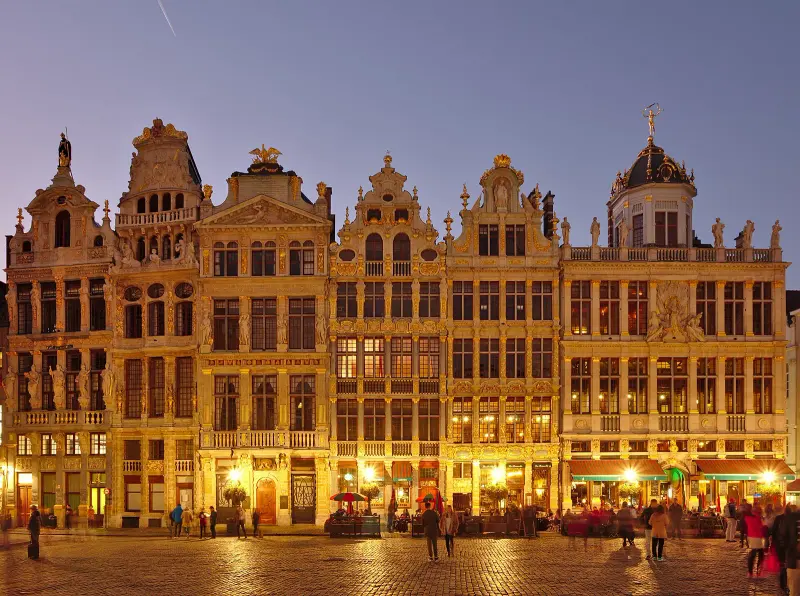
De Luxembourg à Bruxelles et en Belgique : un train par heure, 21,30 €, sans réservation
Luxembourg–Bruxelles en train : InterCity toutes les heures, 3 h 15 environ, 21,30 € fixe en 2de classe. Et Liège, Arlon, Bastogne, Charleroi.
De Luxembourg à Copenhague et en Scandinavie en train (ou en avion)
Luxembourg–Copenhague en train en une journée via Cologne et Hambourg (dès 37,99 €), puis la Suède et la Norvège — et Luxair vers Helsinki en 2026.
De Luxembourg à Londres en train ou en avion : l’Eurostar via Bruxelles ou Paris
Luxembourg–Londres en train : InterCity jusqu'à Bruxelles (3 h 15) puis Eurostar (2 h), ou TGV jusqu'à Paris (2 h 10). Prix, enregistrement, contrôles.
De Luxembourg à Lyon, Marseille et dans le sud de la France en TGV direct
Deux TGV directs par jour de Luxembourg à Dijon et Lyon, puis Marseille ou Montpellier — sans changer à Paris. Horaires, prix, correspondances.
De Luxembourg à Metz, Nancy et Strasbourg : trains, bus et gares frontalières gratuites
Luxembourg–Metz, Nancy, Strasbourg : TER, quelques TGV directs, bus transfrontaliers vers la Lorraine et deux gares françaises accessibles gratuitement.
De Luxembourg à Prague, Varsovie et Cracovie en train en une journée
Luxembourg–Prague en une journée via Coblence, Francfort et Dresde (dès 37,99 €), Varsovie ou Cracovie via Cologne et Berlin (dès 49,99 €).
De Luxembourg à Trèves et sur la Moselle : 50 minutes en train, bus dès 3 €
Luxembourg–Trèves : 50 minutes en train horaire (5,90 €) ou en bus transfrontalier (RegioZone 3 €), bus 302, 303, 306 et villages de la Moselle.
De Luxembourg à Vienne, Salzbourg et en Autriche en train — en une journée ou de nuit
Luxembourg–Vienne en train : en une journée via Coblence et un ICE direct (dès décembre 2026), ou de nuit en Nightjet. Dès 37,99 €.
De Luxembourg au Portugal : avion, train en deux jours et car
Luxembourg–Portugal : vols directs vers Lisbonne, Porto et les îles, ou deux à trois jours de train via Paris et l'Espagne — et la communauté portugaise.
De Luxembourg vers l’Allemagne en train : Coblence, Cologne, Francfort, Munich et Berlin
Luxembourg–Allemagne en train : par la Moselle jusqu'à Coblence (2 h 23), puis IC et ICE — Francfort dès 3 h 55, Munich 6 h 40, Berlin 8 h 45.
De Luxembourg vers l’Italie en train : Milan et Turin en une journée, via Paris ou Zurich
Luxembourg–Italie en train en une journée : TGV jusqu'à Paris puis Frecciarossa vers Turin et Milan, ou via Cologne, Zurich et le Gothard.
Driving in and to Luxembourg: speed limits, rules, fuel and tolls next door
Driving in Luxembourg: speed limits (50/90/130, 110 in the wet), drink-drive limits, winter tyres, no tolls — and what changes across the border.
Entering Luxembourg: Schengen, passports, the EES and ETIAS (2026)
Entering Luxembourg: what EU and non-EU travellers need, the Entry/Exit System (fully running since 10 April 2026) and the status of ETIAS.
Entrer au Luxembourg : Schengen, passeport, EES et ETIAS (2026)
Entrer au Luxembourg : ce qu'il faut aux voyageurs de l'UE et hors UE, le système d'entrée/sortie (pleinement en service depuis le 10 avril 2026), ETIAS.
Excursions d’une journée depuis Luxembourg-ville en train et en bus gratuits
Excursions depuis Luxembourg-ville en transports gratuits : Clervaux, Vianden, Echternach, le Mullerthal, la Moselle, Schengen, Esch-sur-Alzette.
Free public transport in Luxembourg: how it works — and what is not free
Buses, trams and 2nd-class trains are free in Luxembourg since 1 March 2020. What's still paid — 1st class, cross-border trips — and how to buy it.
Frontaliers : venir travailler au Luxembourg depuis la France, la Belgique ou l’Allemagne
Environ 230 000 frontaliers viennent travailler au Luxembourg chaque jour : trains, bus transfrontaliers, P+R, RegioZone (40 €/mois), appli CFL go.
Les aéroports proches du Luxembourg : Findel, Francfort, Bruxelles et Charleroi comparés
Aéroports proches du Luxembourg : Findel (tram et bus gratuits), Francfort (4 h environ en train), Bruxelles (InterCity) et Charleroi (Flibco).
Les trains de nuit accessibles depuis le Luxembourg : Nightjet depuis Coblence, Paris–Nice
Trains de nuit depuis le Luxembourg : aucun ne part d'ici, mais le Nightjet (Coblence, Cologne) et l'Intercités de Nuit (Paris) sont proches.
Les transports publics gratuits au Luxembourg : comment ça marche — et ce qui reste payant
Bus, tram et trains en 2de classe gratuits au Luxembourg depuis le 1er mars 2020. Ce qui reste payant (1re classe, transfrontalier) et comment payer.
Luxembourg Airport to the city centre: tram, bus and taxi (free public transport)
Luxembourg Airport (Findel) to the city centre and station: tram T1 since 2025, buses 16 and 29 every 10–15 minutes, taxis — and no ticket needed.
Luxembourg to Amsterdam and the Netherlands by train: three routes compared
Luxembourg to Amsterdam by train: via Brussels and Eurostar (about 5h40), or via Liège and Maastricht (about 6h10, €52.10, no booking needed).
Luxembourg to Barcelona, Madrid and Spain: by train in a day, or fly
Luxembourg to Barcelona in a day: direct TGV to Lyon and an AVE to Barcelona, then Madrid in about 2h30. Fares, times and Luxair's new 2026 routes.
Luxembourg to Basel, Zurich and Switzerland by train: three routes
Luxembourg to Switzerland by train: fastest via Mulhouse to Basel (about 3h16), cheaper via Trier and Mannheim (from €37.99). How to book each.
Luxembourg to Brussels and Belgium: hourly trains, €21.30, no booking needed
Luxembourg to Brussels by train: hourly InterCity, about 3h15, a fixed €21.30 in 2nd class. Plus Liège, Arlon, Bastogne and Charleroi airport.
Luxembourg to Copenhagen and Scandinavia by train (or plane)
Luxembourg to Copenhagen by train in a day via Cologne and Hamburg (from €37.99), onward to Sweden and Norway — and Luxair’s new 2026 route to Helsinki.
Luxembourg to Germany by train: Koblenz, Cologne, Frankfurt, Munich and Berlin
Luxembourg to Germany by train: hourly along the Moselle to Koblenz (2h23) for IC and ICE — Frankfurt from about 3h55, Munich 6h40, Berlin 8h45.
Luxembourg to Italy by train: Milan and Turin in a day, via Paris or Zurich
Luxembourg to Italy by train in one day: TGV to Paris and Frecciarossa to Turin and Milan, or via Cologne, Zurich and the Gotthard. Fares and times.
Luxembourg to London by train or plane: Eurostar via Brussels or Paris
Luxembourg to London by train: InterCity to Brussels (3h15) and Eurostar (2h), or TGV to Paris (2h10) and Eurostar. Fares, check-in, border checks.
Luxembourg to Lyon, Marseille and the south of France by direct TGV
Two direct TGVs a day from Luxembourg to Dijon and Lyon, on to Marseille or Montpellier — no change in Paris. Times, fares and connections.
Luxembourg to Metz, Nancy and Strasbourg: trains, buses and free border stops
Luxembourg to Metz, Nancy and Strasbourg: TER trains, a few direct TGVs, cross-border buses to Lorraine and two French stations you reach for free.
Luxembourg to Paris by train: TGV in about 2h10, fares from €25
Luxembourg to Paris by train: direct TGVs to Gare de l'Est several times a day in about 2h10. Fares, booking, car and coach — and words for the trip.
Luxembourg to Portugal: flights, trains over two days, and coaches
Luxembourg to Portugal: direct flights to Lisbon, Porto and the islands, or two to three days by train via Paris and Spain — and the Portuguese community.
Luxembourg to Prague, Warsaw and Kraków by train in a day
Luxembourg to Prague in a day via Koblenz, Frankfurt and Dresden (from €37.99), and to Warsaw or Kraków via Cologne and Berlin (from €49.99).
Luxembourg to Trier and the Moselle: trains in 50 minutes, buses from €3
Luxembourg to Trier: 50 minutes by hourly train (€5.90) or cross-border bus (RegioZone €3) — buses 302, 303 and 306, and the Moselle wine villages.
Luxembourg to Vienna, Salzburg and Austria by train — in a day or overnight
Luxembourg to Vienna by train: in a day via Koblenz and a direct ICE (from December 2026), or overnight on the Nightjet. From €37.99.
Luxembourg–Paris en train : TGV en 2 h 10 environ, à partir de 25 €
Luxembourg–Paris en train : TGV directs vers Paris-Est plusieurs fois par jour en 2 h 10 environ. Prix, réservation, voiture et car.
Night trains within reach of Luxembourg: Nightjet from Koblenz, Paris to Nice
Night trains from Luxembourg: none start here, but the Nightjet from Koblenz or Cologne and the Intercités de Nuit from Paris are close. How to book.